Luang Prabang brings together riverside streets, Buddhist temples and a rich tradition of Lao crafts and hospitality. Much of the historic centre is easy to explore on foot, while waterfalls, farms and caves make rewarding trips into the surrounding countryside.
These ten experiences offer a varied introduction to Luang Prabang. Allow time between visits to enjoy the town at an unhurried pace.
Observe the morning alms ceremony
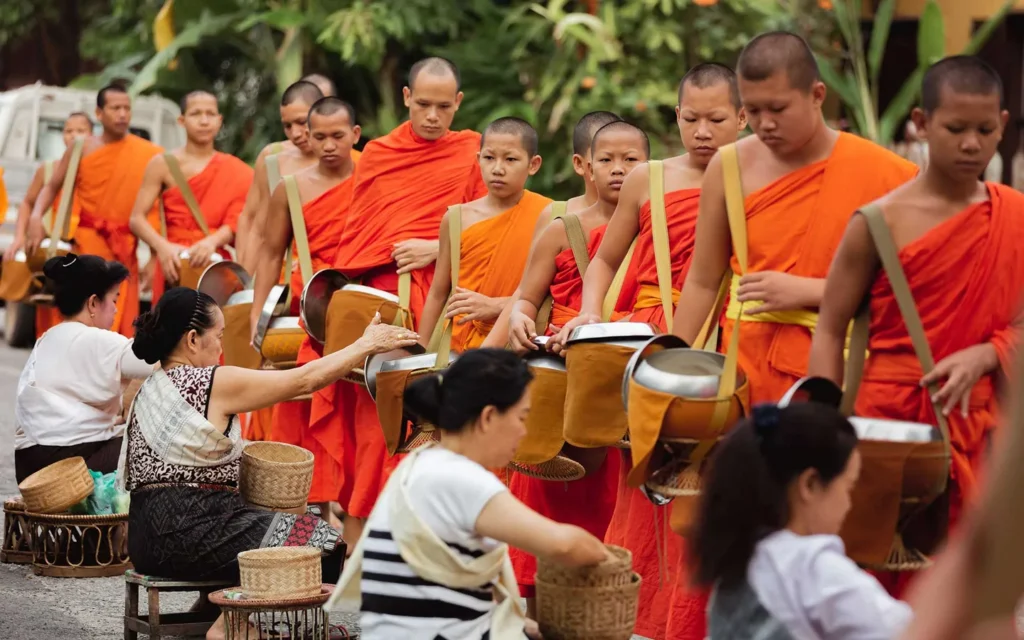
The daily alms ceremony is an important Buddhist tradition in Laos. In Luang Prabang, monks collect offerings from local residents around dawn. Visitors are welcome to observe quietly from a respectful distance, with shoulders and knees covered and cameras kept unobtrusive.
Take part only if the offering is meaningful to you, and ask a local guide about appropriate food and etiquette beforehand. Do not block the procession, use flash or touch the monks. This is a religious practice, rather than a performance for visitors.
Visit Kuang Si Falls
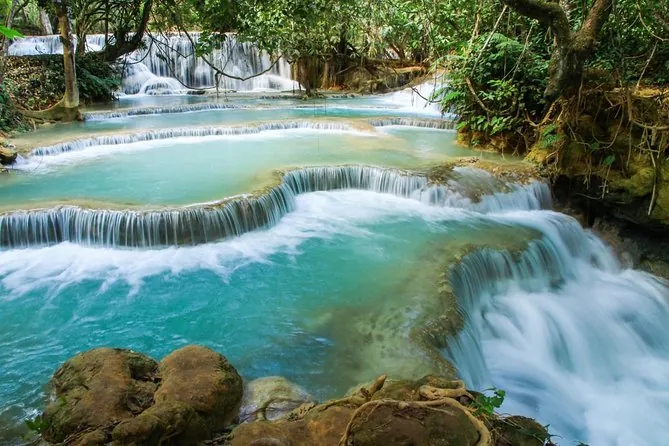
Kuang Si’s main cascade feeds a series of turquoise pools surrounded by forest. Paths and viewpoints let you enjoy the falls without entering the water; swimming is permitted only in designated areas when conditions allow.
Wear shoes with good grip, as paths can be wet and slippery. Follow signs and staff instructions, especially after heavy rain, and avoid jumping from rocks or entering closed pools.
Climb Phousi Hill
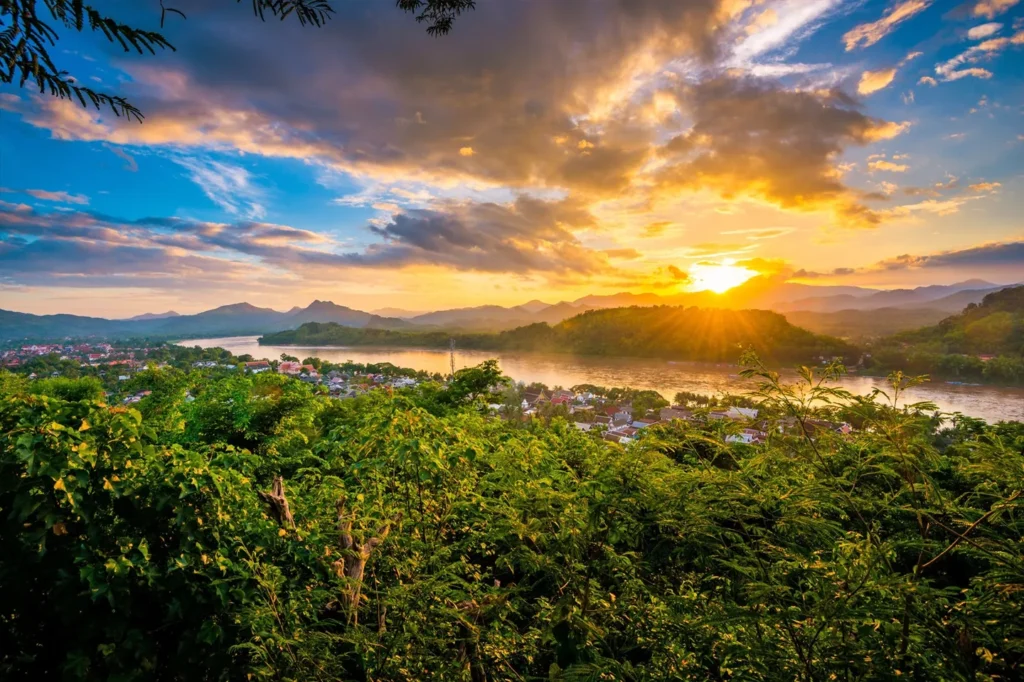
Phousi rises roughly 100 metres above the town, with views across Luang Prabang, the Mekong and the surrounding hills. It is a popular place to watch the changing light at sunrise or sunset.
The climb involves around 300 steps and can be tiring in the heat. Take your time, carry water and remember that the summit is a sacred temple site. Sunset can be crowded; an earlier visit often feels calmer.
Explore Pak Ou Caves
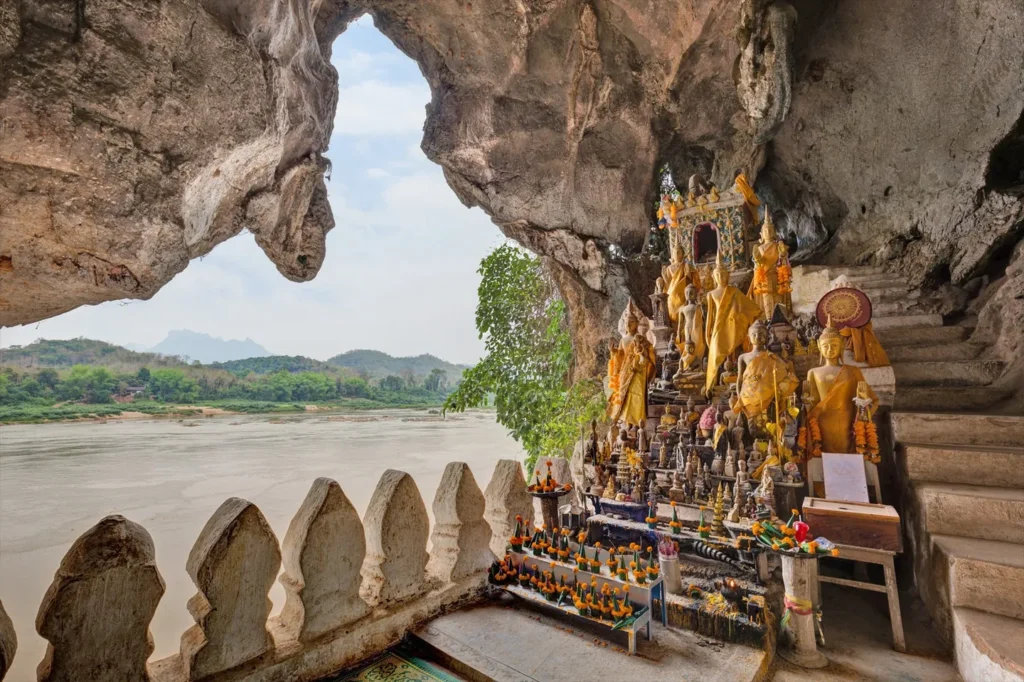
At the meeting of the Mekong and Nam Ou rivers, Pak Ou’s limestone caves contain thousands of Buddha figures placed there over generations. The lower cave, Tham Ting, and upper cave, Tham Theung, remain places of worship.
The lower cave receives daylight, while the upper cave is much darker. Bring a torch and take care on the steps. A river journey to the caves is also a chance to see the landscape beyond town.
Visit the Royal Palace Museum
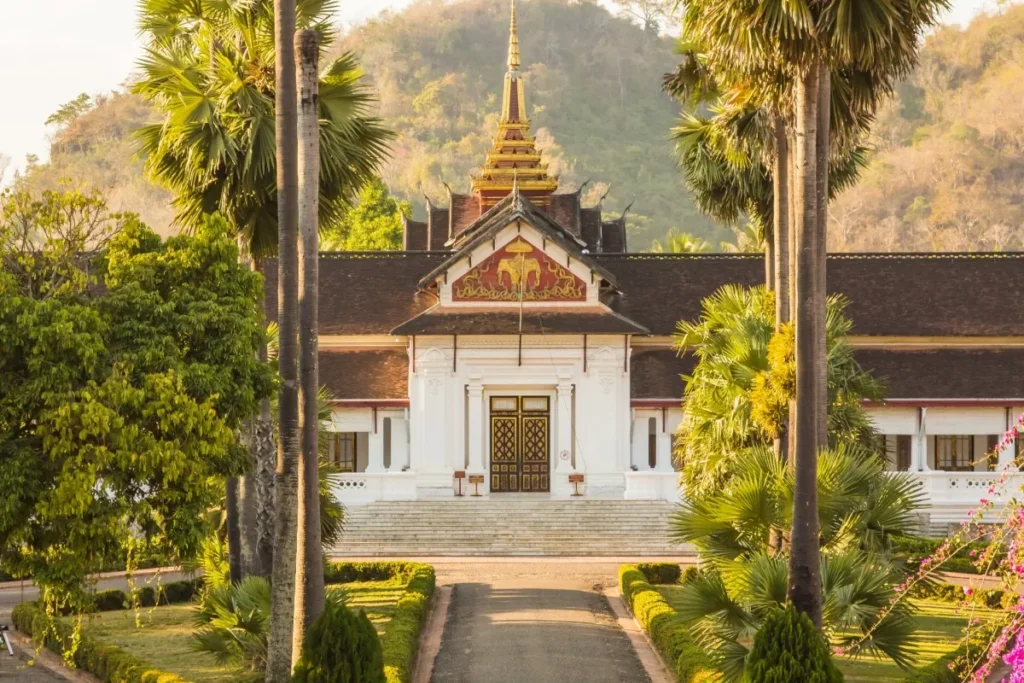
The former royal residence offers an introduction to Laos’s royal history. Its architecture combines Lao and French influences, while rooms and displays include ceremonial objects, furnishings and gifts associated with the royal family.
Allow time to explore the grounds as well as the museum. Dress respectfully and check current opening hours and photography rules before visiting.
Explore Laos on a 10-day private journey
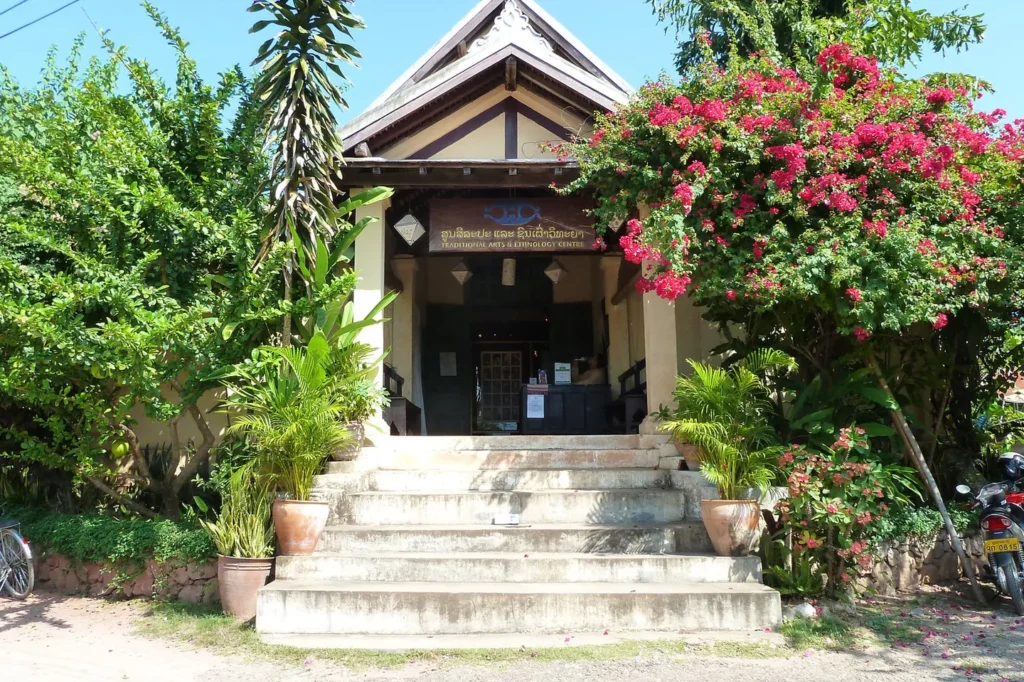
Discover the Traditional Arts and Ethnology Centre
The Traditional Arts and Ethnology Centre introduces the cultural diversity of Laos through exhibitions and research developed around the country’s ethnic communities.
Textiles, clothing, tools and personal stories help explain how traditions are practised and passed on. It is a thoughtful place to learn more before visiting villages or shopping for handmade crafts.
Learn about rice farming at Living Land
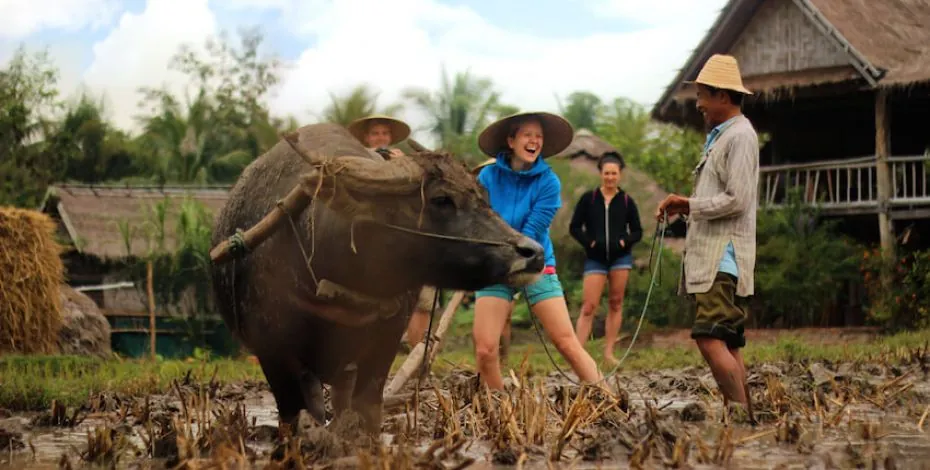
Living Land offers a hands-on introduction to rice cultivation near Luang Prabang. Depending on the programme, visitors can try stages of the process and learn about the work involved in producing this everyday staple.
The farm’s rice fields and vegetable gardens provide a scenic setting for the experience. Book ahead and ask which activities are available for your travel dates and mobility needs.
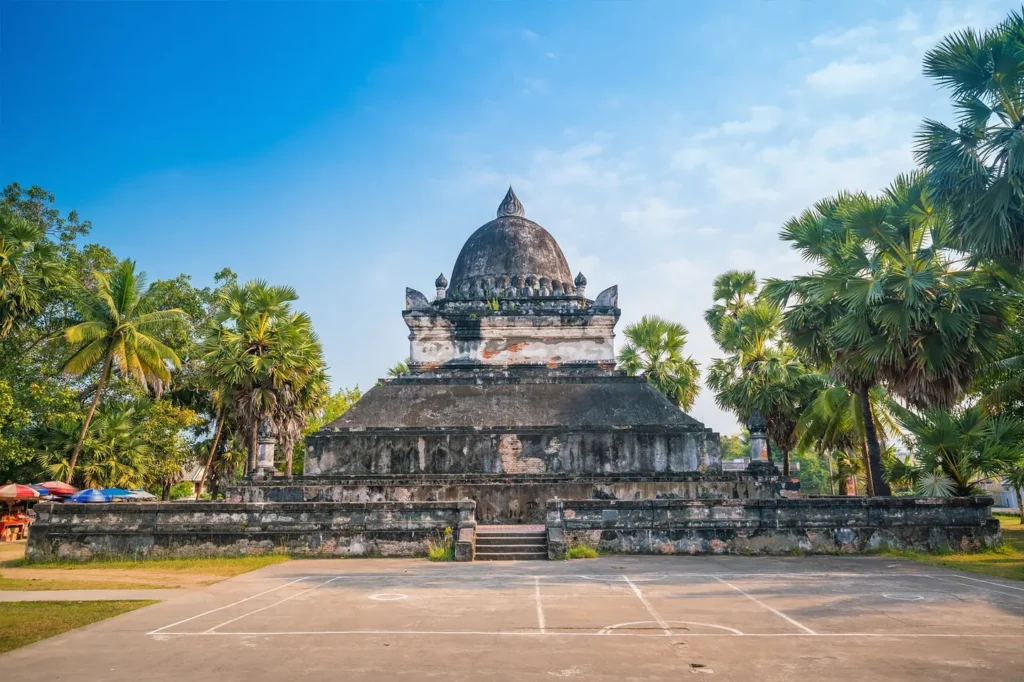
Visit Wat Wisunarat
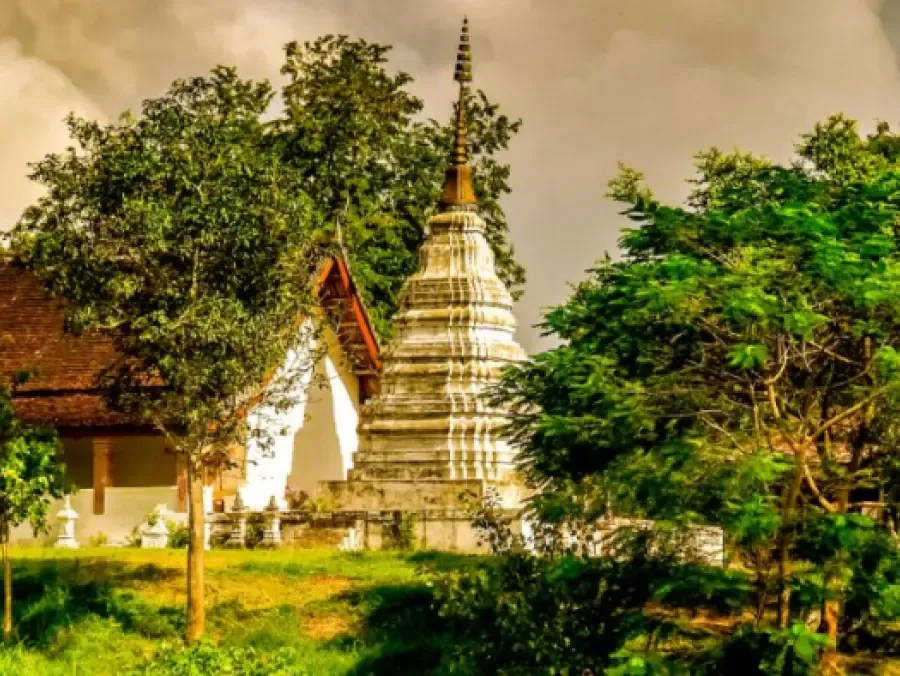
Founded in 1513, Wat Wisunarat—also known as Wat Visoun—is one of Luang Prabang’s oldest temple foundations. The buildings have been restored over time, and the site remains an important part of the town’s religious heritage.
Look for the rounded That Makmo stupa, often called the ‘watermelon stupa’. Take a quiet walk through the grounds and observe the same respectful dress and behaviour expected at other temples.
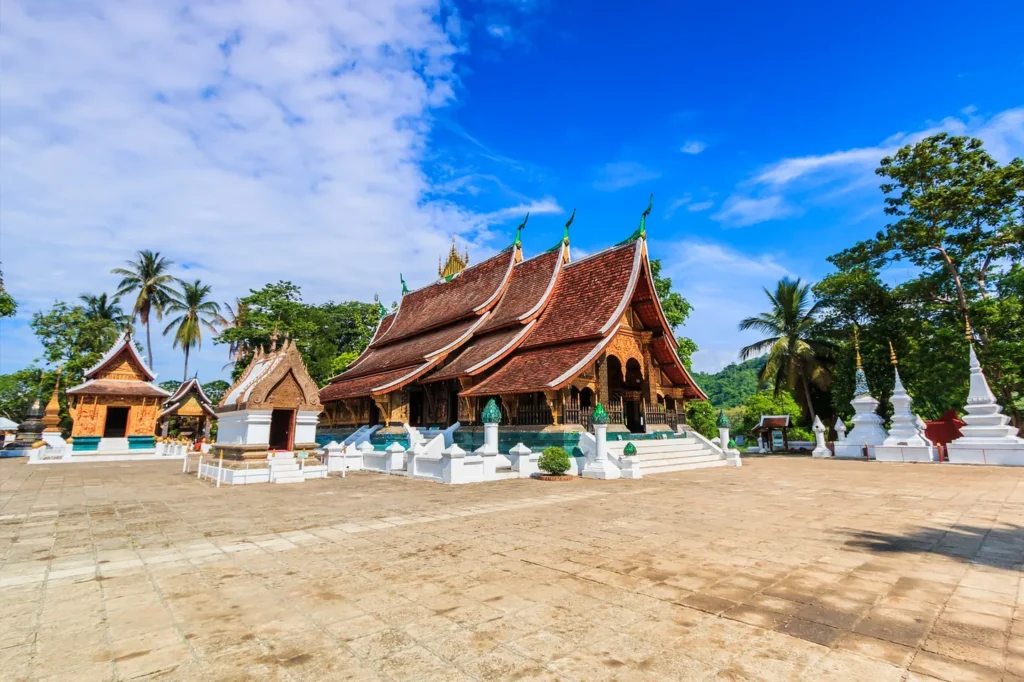
Explore Wat Xieng Thong
Built in the 16th century, Wat Xieng Thong is known for its sweeping, low roofline, carved decoration and colourful mosaics. The tree-of-life mosaic is a particular highlight.
This remains an active religious site. Visit at a relaxed pace, remove shoes where required and give worshippers space. Morning light can be especially appealing for photographs.
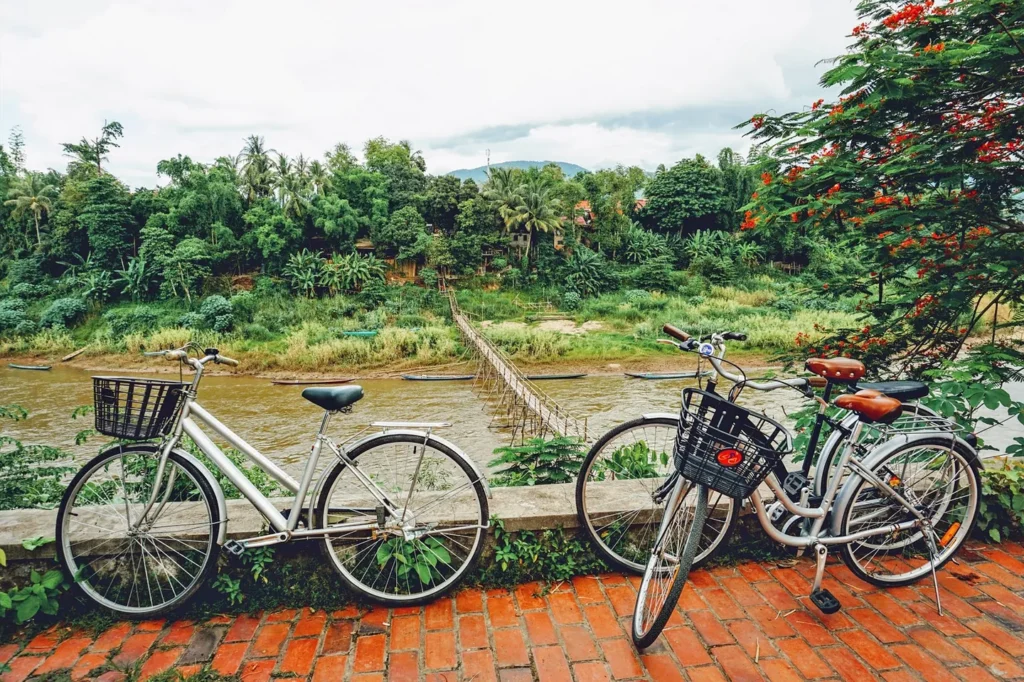
Cycle through the countryside
A guided bicycle ride is a good way to explore quieter roads, villages and farmland beyond the historic centre. Routes range from gentle outings to longer rides on rougher surfaces.
Choose a route suited to your fitness and confidence in traffic. Confirm distance, terrain, equipment and any river crossings before booking, as arrangements vary between operators.
To turn these ideas into a visit, explore Classic Luang Prabang in 4 Days. The itinerary gives you a starting point for planning time in Luang Prabang with local advice.