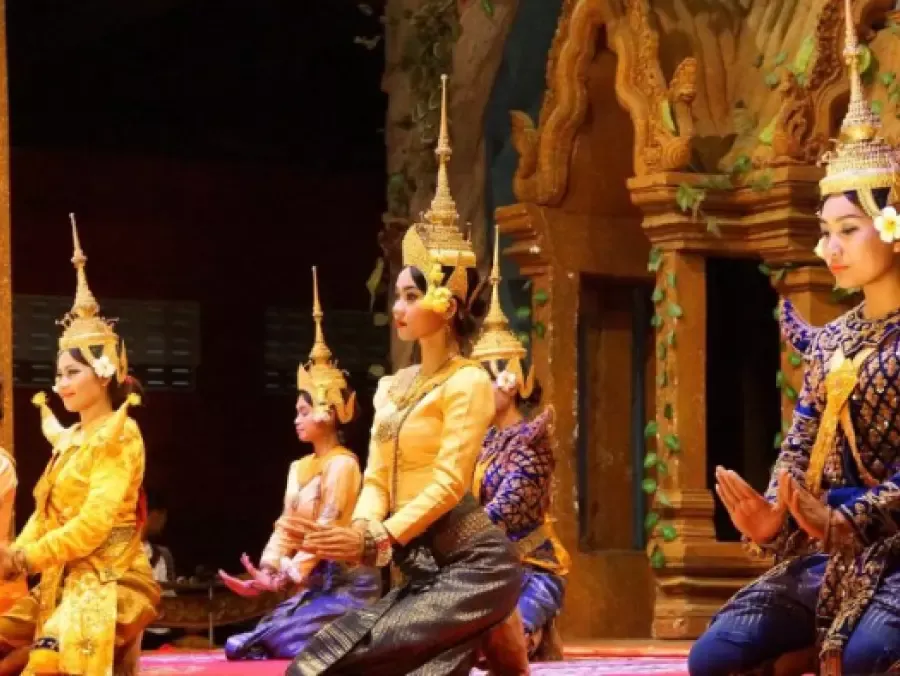
An Apsara performance offers a memorable introduction to Cambodian classical dance. Elaborate costumes, measured steps and expressive hands bring celestial figures to life. The wider Royal Ballet of Cambodia is recognised by UNESCO; Apsara dance is part of this living artistic tradition.
What is Apsara Dancing?
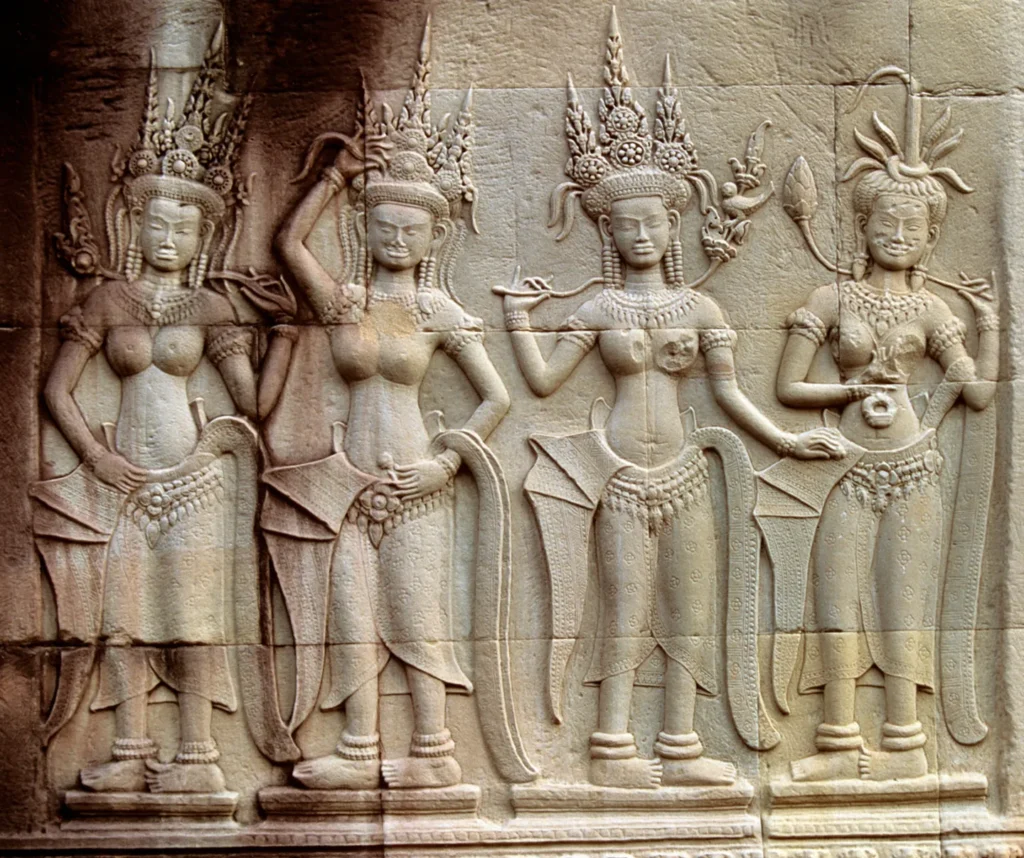
Apsaras are celestial beings associated with water and clouds in Hindu and Buddhist traditions. Their images appear throughout Cambodian art, including the carved figures at Angkor.
These figures have roots in ancient Indian mythology and became part of the artistic traditions of South and Southeast Asia. Looking closely at the carvings at Angkor Wat can enrich your experience of a dance performance.
Dancers use controlled movements, richly decorated costumes and music to evoke these celestial figures. A performance is an opportunity to appreciate the skill behind a tradition that remains meaningful in Cambodia today.
Apsara Dance History
Angkor’s temple carvings provide an important source of imagery for Apsara dance. However, the ancient figures and the stage choreography visitors see today should not be treated as an unchanged performance surviving directly from the Angkorian period.
Cambodian classical dance developed in close association with the royal court. Its repertoire includes sacred stories and characters, with different dances serving different ceremonial and artistic purposes.
The Khmer Rouge period devastated Cambodia’s artists and cultural institutions. Teachers and performers have since worked to pass on the repertoire and train new generations. Seeing a carefully presented performance supports appreciation of that work.
Dancers and Movements
The dancers’ costumes
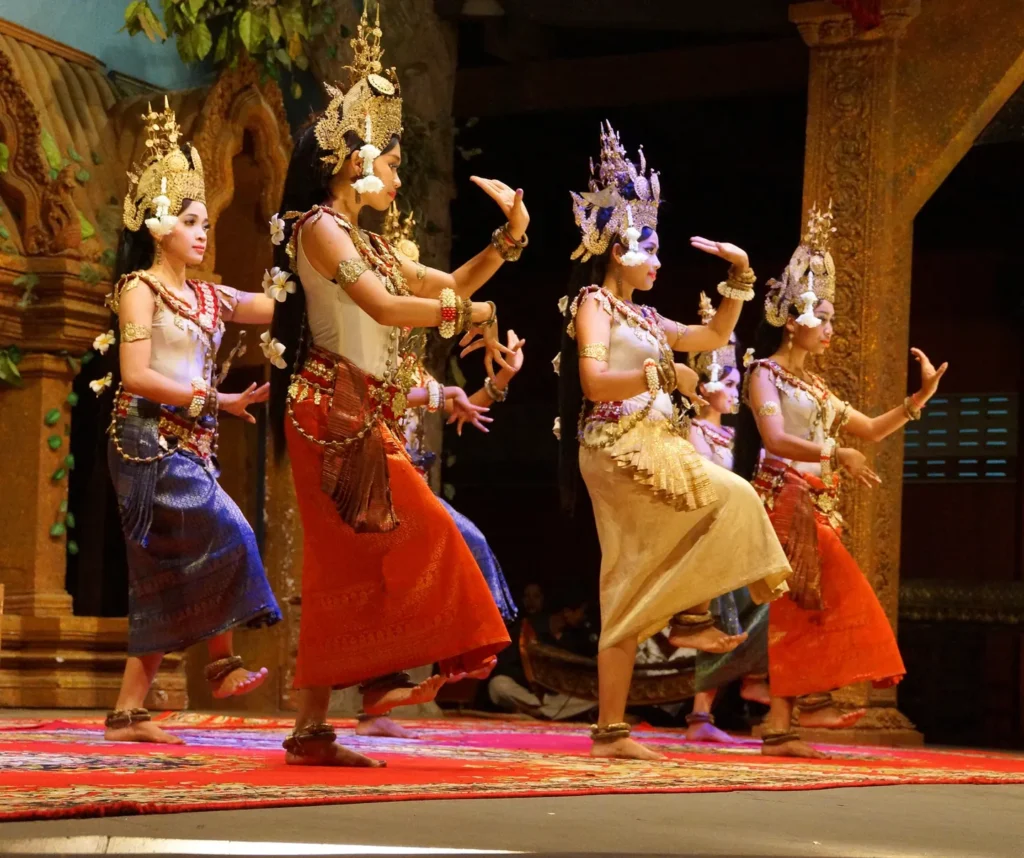
Golden headdresses, patterned silk and decorative jewellery give Apsara costumes their distinctive appearance. Their design draws on Khmer artistic traditions and the figures seen at Angkor.
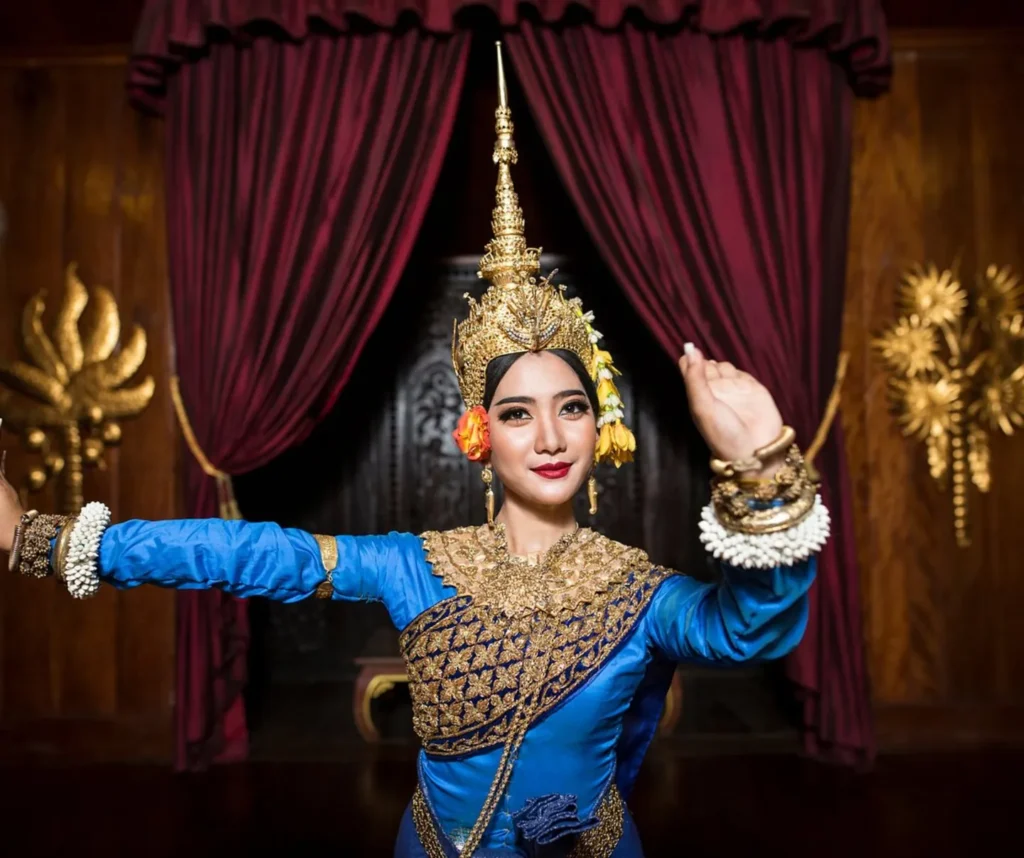
The sampot is arranged around the lower body with carefully shaped folds and a decorated belt. Fabrics and details vary with the production and the role.
A fitted bodice and an ornamental collar complete the silhouette. Some costumes also include a decorative shoulder cloth.
Headdresses help identify a character or role. Floral arrangements and jewellery add detail to the overall design.
Notice how costume, posture and movement work together: even a small turn of the wrist can change the impression of the dancer’s pose.
Characters in Khmer classical dance
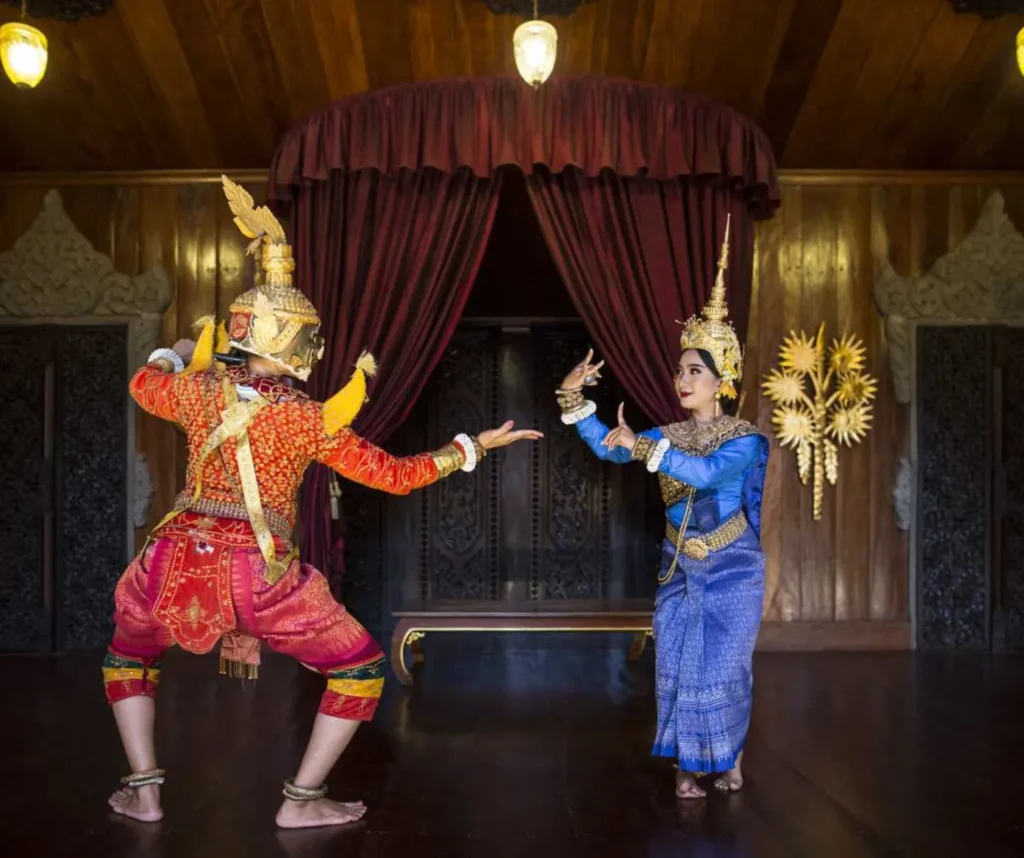
The wider classical repertoire includes male, female, giant and monkey roles. These are character categories, not a list of the performers’ genders, and they do not all appear in every Apsara dance.
Movements
Training requires years of disciplined practice. Dancers develop strength, balance and flexibility so that carefully controlled poses appear fluid and unhurried.
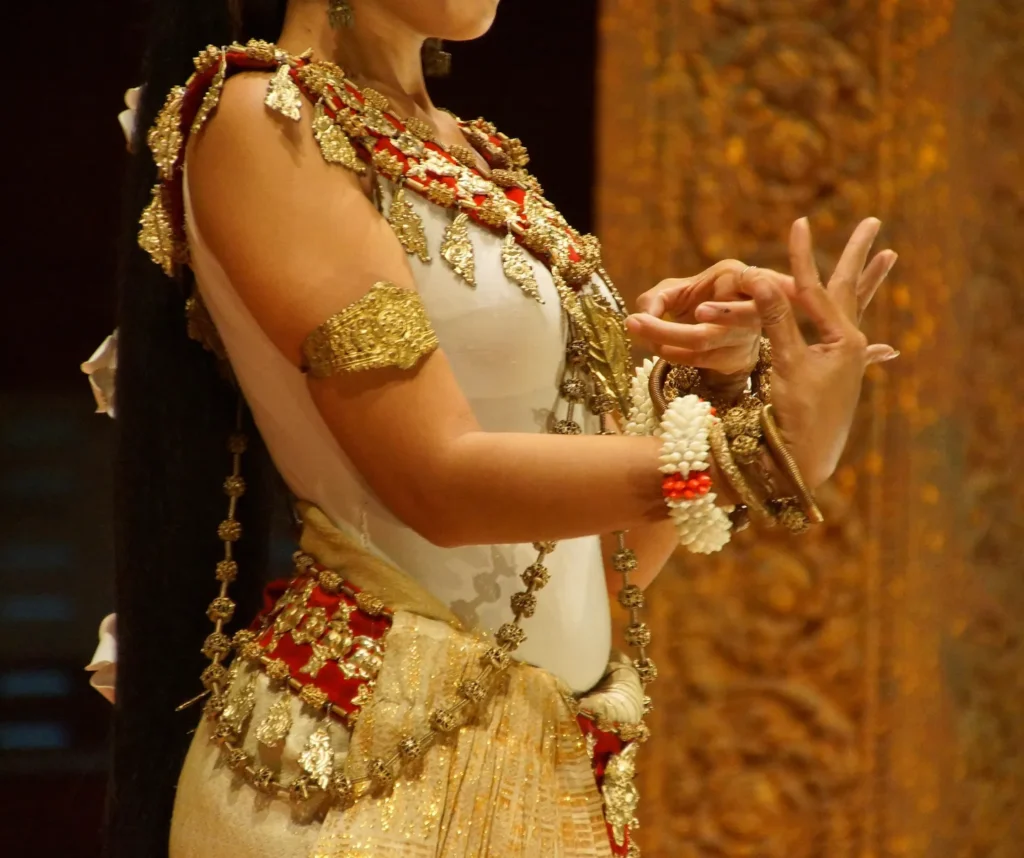
Hand and finger gestures form an expressive language within the dance. Their meaning depends on the movement and the story, so a programme note or a guide’s explanation can help you follow a performance.
Many Apsara presentations feature a central dancer with an accompanying group. The arrangement and choreography depend on the piece.
Rather than looking for a word-for-word translation of every gesture, watch how the hands, eyes and body work together. The music and pace also help shape the scene.
The apparent ease of a performance reflects considerable training. Speaking with a knowledgeable guide can deepen your appreciation of the dancers’ work.
Where to look for an Apsara performance
Phnom Penh and Siem Reap both offer opportunities to see Cambodian dance. Chaktomuk Theatre in Phnom Penh hosts cultural programmes, while Siem Reap has theatres and dinner performances. The venues below have featured dance or shadow-puppet programmes; confirm their current operation and schedule before planning a visit.
Alliance Cafe
– Schedule: Ask whether performances are currently running and book directly.
– Duration: Confirm the programme length when booking.
– Area: Wat Damnak, Siem Reap.
– Programme: Historically associated with shadow puppetry and Khmer dance.
– Planning note: Do not rely on older weekly or seasonal schedules.
Apsara Terrace
– Schedule: Check the hotel’s current performance calendar.
– Booking: Confirm whether dinner and a performance are offered on your chosen date.
– Duration: Ask about dinner and show timings.
– Location: Raffles Grand Hotel d’Angkor, Siem Reap.
– Programme: Confirm the mix of classical dance and other cultural performances.
Apsara Theatre
– Schedule: Check current performance dates and availability.
– Duration: Confirm dinner and show timings before booking.
– Area: Angkor Village, Siem Reap; verify the entrance with the venue.
– Programme: Khmer dance in a theatre setting.
La Noria Hotel
– Schedule: Check whether the hotel’s cultural programme is currently operating.
– Duration: Confirm the format and length directly.
– Area: River Road, Siem Reap.
– Programme: Historically included shadow puppetry and traditional dance.
– Planning note: Confirm the present organiser and performers; older listings may no longer apply.
Temple Balcony
– Schedule: Ask the venue about current performances.
– Duration: Confirm the programme before reserving.
– Area: Pub Street, Siem Reap.
– Programme: Check what kind of dance is included.
The Divine Sala
– Area: Siem Reap; confirm the current venue and address.
– Programme: The Sacred Dancers of Angkor have presented classical Khmer dance here. Check directly for current performances and booking information.
Choose a performance that gives the dancers time and space to present their work, and read any programme notes provided. A little context makes the costumes, music and gestures much more rewarding to watch.
For a wider introduction to the country, explore Cambodia Discovery: Phnom Penh, Battambang and Angkor - 10 Days, linking Phnom Penh, Battambang and Siem Reap in one journey.