
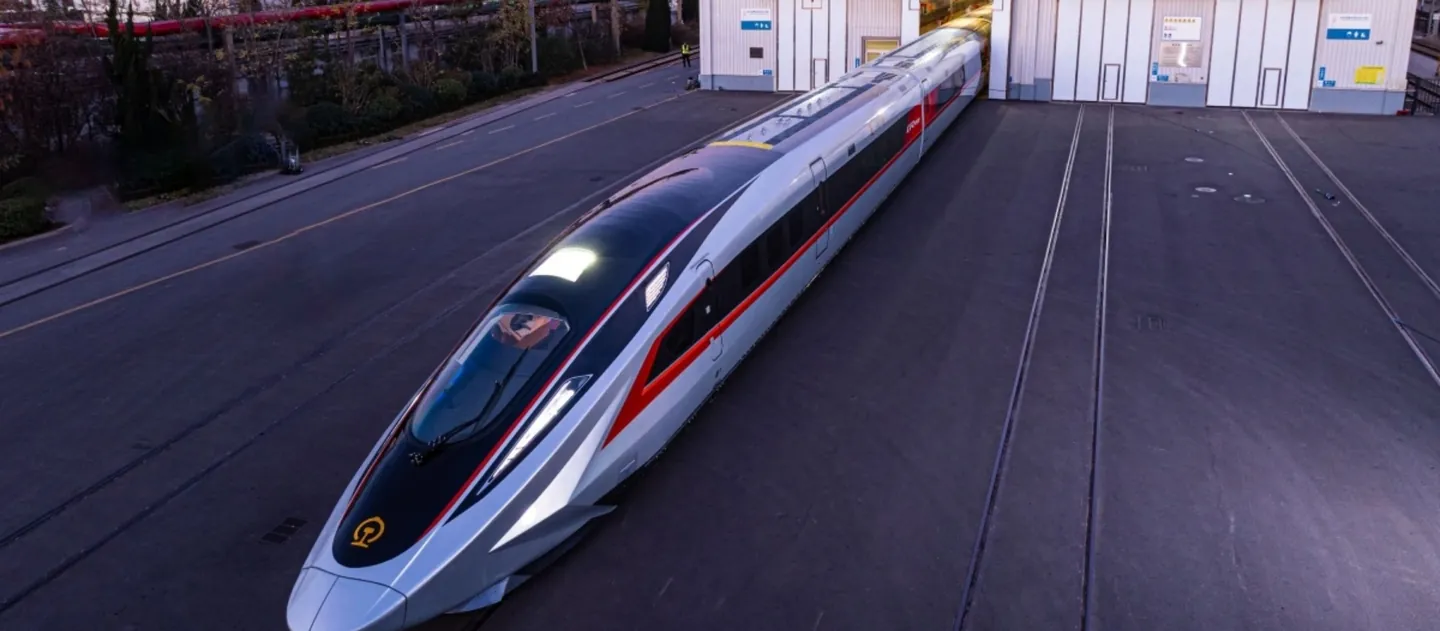
Reports in July 2025 highlighted China’s development of high-speed magnetic-levitation trains with a design target of 600 km/h. A technology demonstration should not be confused with a passenger service that travellers can book.
What the announcement described
– Design speed: up to 600 km/h.
– Shorter intercity journeys were presented as a future possibility, not an operating Beijing–Shanghai timetable.
– Development involved CRRC and related rail-engineering teams.
– Aerodynamic vehicle design was part of the programme.
– Demonstration interiors illustrated a proposed passenger environment.
Testing, infrastructure, approvals and commercial arrangements are separate steps. An announced top speed does not establish when or where a service will open.
The development aims to explore a transport option between conventional high-speed rail and aviation. Its practical use depends on dedicated infrastructure and operating decisions.
Potential features discussed in the reporting
– Higher design speeds.
– Reduced wheel–rail contact noise.
– Electric operation, with environmental impact depending on power supply and infrastructure.
– Different maintenance requirements from conventional rail.
– Energy use that must be assessed under actual operating conditions.
Different maglev technologies use different levitation and guidance systems. Technical details from one prototype should not automatically be applied to another.
Reports also discussed digital monitoring and automated systems, including:
Communication links
Video monitoring
Acoustic monitoring
Trackside sensors
China already operates other maglev services, including the Shanghai airport line. Those existing routes are distinct from the high-speed development described here.
For a journey now, use published railway timetables and book an operating service. This article is a technology-news archive, not a travel connection.
For more ideas and practical reading, explore our travel news articles.