Laos Entry Requirements: E-visas, Border Crossings and Digital Forms
For a trip to Laos, your travel documents need to match your actual route. Arriving by air, crossing a land border and travelling on an international train can involve different formalities. This guide helps you prepare; check the rules for your own nationality, passport and reason for travel before booking.
Check your visa and passport
Visa requirements depend on nationality. If you need a tourist visa, check whether you qualify for the official Lao e-visa and whether it covers your planned stay. The published tourist e-visa stay is 30 days. Confirm passport validity and blank-page requirements for your documents with the relevant Lao embassy or consulate. Source: German Federal Foreign Office travel guidance.
Your entry point matters
The official e-visa portal lists the crossings that accept an e-visa, including selected airports, bridges and railway stations. Check the exact name of your entry point against the current list rather than assuming an e-visa works at every border. Source: Lao eVisa — entry points and information.
The application has three main stages: submit your details and documents, check and pay, then download the Approval Letter. Keep that approval ready for entry; a payment receipt is not a substitute. Check your name, passport number and travel details carefully, and save an offline copy.
Match your documents to the crossing
How you plan to arrive
Examples on the official e-visa list
What to check
By air
Wattay, Luang Prabang and Pakse
Make sure your confirmed arrival airport matches the application.
Via a Lao–Thai Friendship Bridge
Bridges I, II and IV
Specify the bridge number and location; acceptance at one does not imply acceptance at all.
By international train
Boten Railway Station and Khamsavath Railway Station
Check the border station you will actually use, not just your final destination.
Examples, not the complete list: Lao eVisa — accepted entry points, reviewed on 27 October 2026. Always confirm the current transport connection and whether the crossing is open.
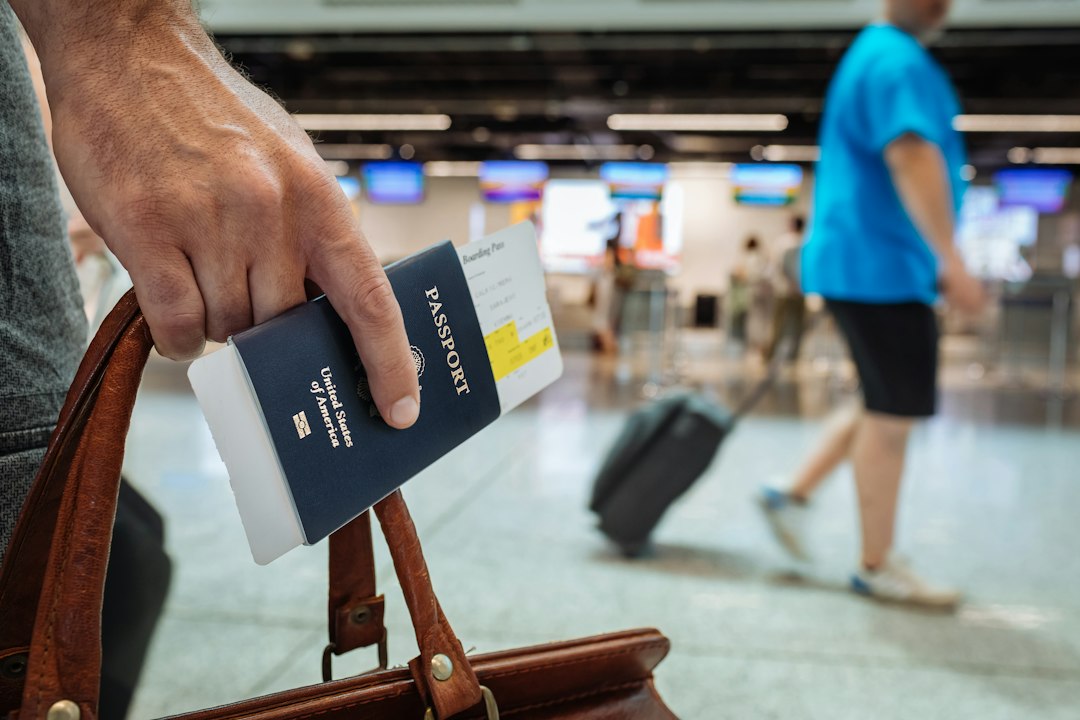
Your documents must match your actual entry point. Illustrative photograph, not a Lao eVisa Approval Letter sample.
Preparing your uploads: The official guidance asks for a 4 × 6 cm photograph taken within the last six months and your full passport details page, including the two machine-readable lines along its lower edge. Do not crop out important information. Normal processing is stated as three working days after a complete application and payment, but queries and public holidays can make it longer. Source: Lao eVisa — documents and processing.
Before confirming your final bookings: Record your entry date, crossing and transport together. If the airport or border changes later, check the documents again. When arriving from Vietnam or Cambodia, do not assume that an e-visa intended for a different crossing will be accepted.
After approval: Download the Approval Letter, compare it with your original passport and keep it available offline. Save the payment receipt, application reference and approval separately. Any digital entry or departure declaration is an additional step, not a replacement for the approval.
Digital entry and departure registration
Check whether your crossing requires the Lao Digital Immigration Form for arrival and departure. Published guidance identifies Wattay, Luang Prabang and Pakse international airports and Lao–Thai Friendship Bridge I, with registration within three days before each arrival or departure. Confirm the current scope on the Lao Digital Immigration Form portal. The form does not replace a visa.
Prepare a multi-country itinerary
List all border crossings in date order. A Vietnam–Laos–Thailand journey requires you to check the entry conditions for each country, not only Laos. A return visit involves another entry check. Whenever your route changes, review your documents along with your flights and hotels.
Confirm access and acceptance of your documents before committing to a land transfer. Another traveller’s experience may involve a different passport or entry category, and advice from an earlier travel season may no longer apply.
A practical checklist
Check passport validity and blank pages.
Compare your entry point with the current e-visa list.
Save your Approval Letter, itinerary and accommodation details offline.
Check any additional digital registration for both arrival and departure.
Review every country’s requirements if your route changes.
Where to get binding information
Our team can organise your itinerary and provide the booking details needed for your preparation. Visa and admission decisions remain with the Lao authorities. Recheck their guidance shortly before travel; this article does not guarantee a visa or replace advice specific to your documents.
Best Time to Visit Laos: Luang Prabang, Landscapes and a Relaxed Pace
For Laos, it pays to think about the landscape and your preferred pace together. Temple visits and town walks have different priorities from hikes and river journeys. Choose a route that will feel enjoyable in the likely conditions, rather than selecting a month in isolation.
Drier and wetter months
Laos has a monsoon climate. Alongside rain and heat, smoke and dust can affect air quality during the dry season; official guidance notes that this often peaks from mid-March to mid-April. Check local air quality as well as the weather before outdoor activities. Source: German Federal Foreign Office — climate and health.
A seasonal guide for culture and nature trips
Period
General pattern
What it means for your plans
November to February
A useful first window to compare for a culture and nature itinerary. November can still bring transitional conditions.
Combine town visits with selected outdoor excursions, while checking paths and the actual forecast.
March to April
Drier weather does not always mean clear air. Smoke pollution often peaks from mid-March to mid-April.
Check air quality before strenuous outdoor activities. Discuss alternatives with your clinician and travel team if you have a respiratory condition.
May to November
Rainy-season conditions can bring flooding and landslides.
Allow flexibility for rural transfers, walks and river journeys, with confirmed alternatives.
Climate and air-quality guidance from the German Federal Foreign Office. November appears in both windows because the seasons change gradually; month boundaries are not fixed weather boundaries.
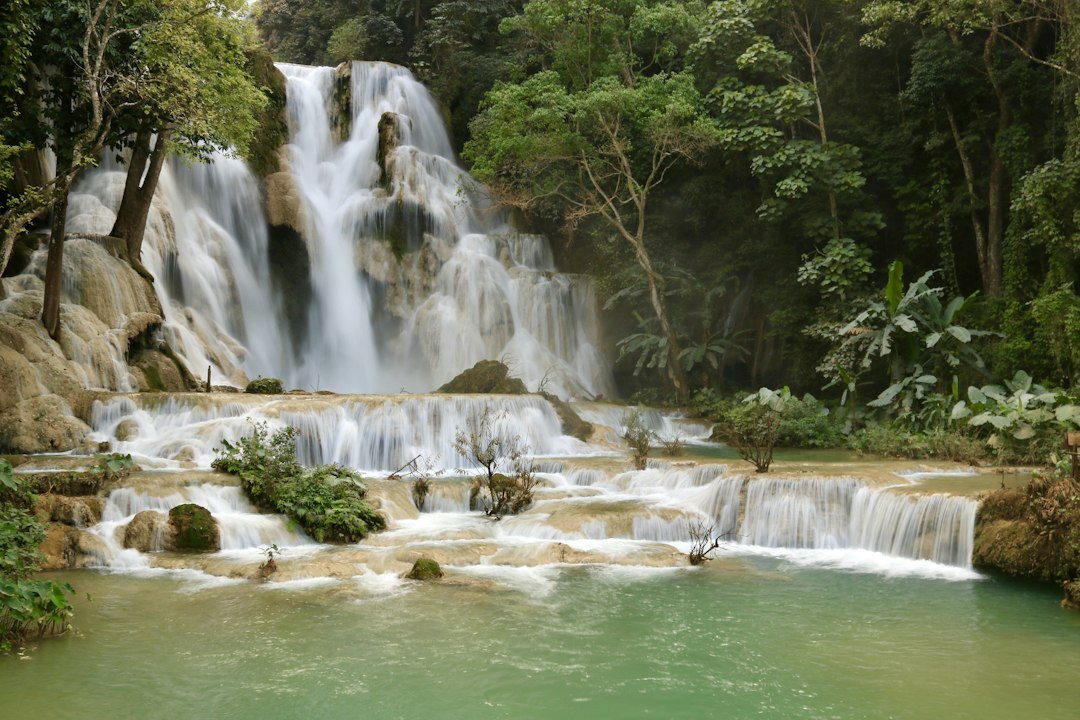
Kuang Si: check water levels, paths and accessible areas before visiting. A photograph does not guarantee the conditions on your travel day.
An idea for three nights in Luang Prabang: Use arrival day to settle in and explore near your accommodation. Devote the first full day to the town and its temples, then choose a nature outing or cooking class for the second according to conditions. You do not need another change of location to enjoy variety. With four nights, you can add a free day between activities.
For waterfalls and walks: Ask about distances, steps, slippery sections and shorter alternatives. A weather update is not permission to use a closed path or swimming area. Do not improvise a detour around a closure simply to complete an outing.
If your holiday dates are fixed: Tell us two experiences you would most like to include and one you could skip if needed. This makes the route easier to adapt. If Laos is a short addition to a larger trip, one regional focus often works better than several flights and one-night stays.
Give Luang Prabang time
A town visit need not be an uninterrupted sequence of temples. Allow for early or late walks, breaks and a market visit or cooking experience. Staying several nights makes it easier to adjust to the weather and how you feel; one very full day offers less flexibility.
Consider what matters most to you: architecture, religious life, food or scenery. Those interests shape the order of each day. An unhurried morning with good explanations can be more memorable than numerous brief stops, so your preferred pace is an important part of the plan.
Nature outings and river journeys
For hikes, check paths and access as well as the forecast for the nearest town. Ask about distance, terrain, the return route and alternatives. River trips depend on current operating conditions and the operator’s assessment. A route shown on a map is not necessarily a confirmed service.
Leave a buffer between weather-dependent activities and important connections. Agree what happens if an outing is cancelled. Free time between more intensive stages, as well as at the end of the trip, gives you useful flexibility.
Fixed dates or a flexible travel window?
With fixed dates, shape the itinerary around the season. With flexibility, first choose your priority experiences, then compare suitable times to travel. A period that works well for cultural visits may require different preparation for a more demanding outdoor route.
Combining Laos with a neighbouring country
Conditions may differ across the regions on a multi-country journey. Compare your actual destinations rather than national averages. A shorter, connected route can be easier to adapt than extra flights for single-night stops. The right balance depends on your interests, not a standard trip length.
Check again before each stage
Keep rain protection, suitable shoes and a dry document pouch accessible. Check short-term warnings and transfer confirmations. If air quality could affect your health, include route planning in your medical preparation. A thoughtful itinerary allows for uncertainty and alternatives rather than promising particular weather.
Food and Drink in Laos: Local Flavours, Markets and Cooking Classes
A food-focused journey through Laos rewards time for explanations and local encounters. A market visit, a shared meal and a cooking class each offer different insights. Give them a proper place in the day rather than fitting them between too many other activities.
Begin with an introduction
Ask for a selection that explains ingredients and eating customs. For example, Tamarind restaurant and cooking school in Luang Prabang describes introductions to Lao flavours and a course combining a market visit, preparation and eating together. This is one possible format, not an automatically included part of our tours. Source: Tamarind – restaurant and cooking school.
What to try in Luang Prabang
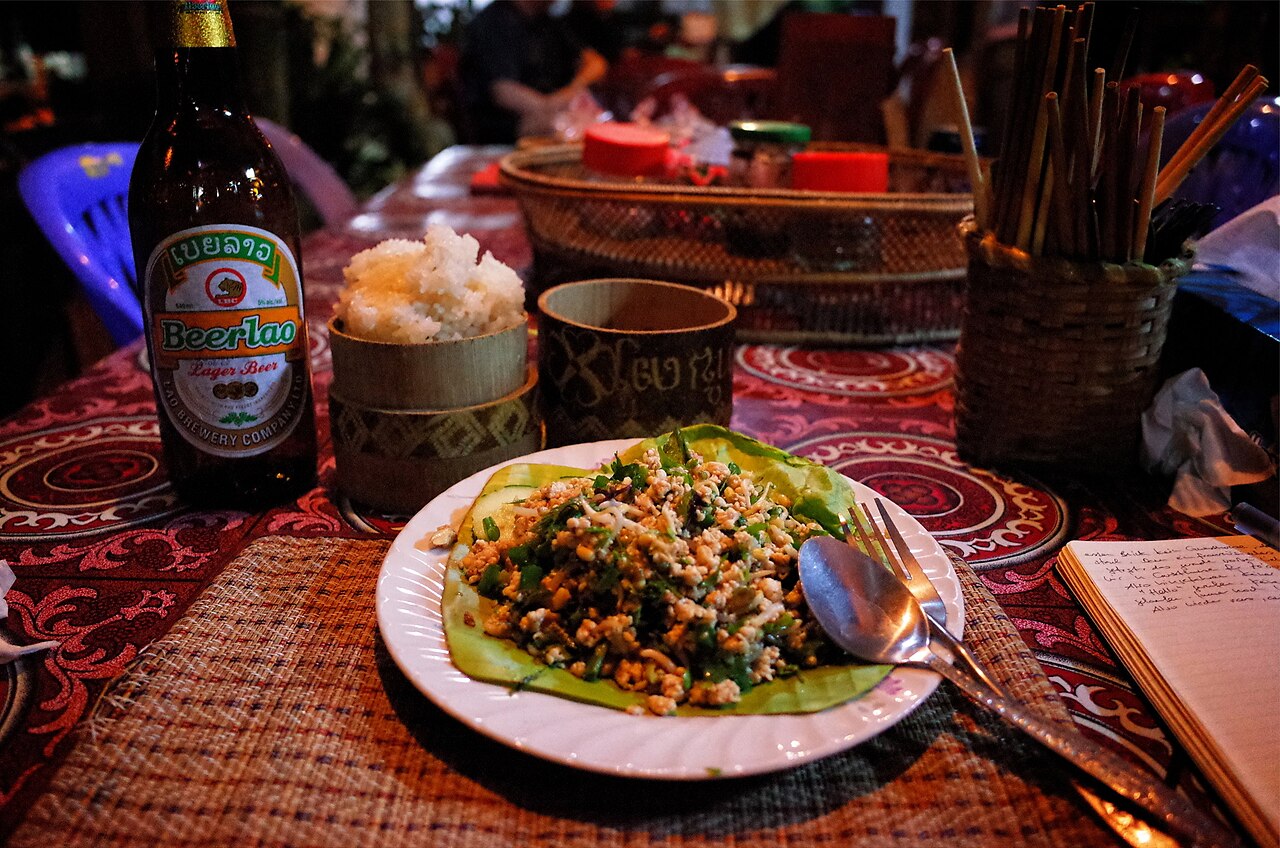
Sticky rice accompanies many meals and is paired with a variety of dishes. Jeow are seasoned accompaniments and dips whose ingredients and chilli levels vary. An introduction may also include Luang Prabang sausage, herb-filled fish in banana leaf and or lam, a regional stew. Plant-based options may include tofu laap, although the exact recipe still needs to be checked with the kitchen. These examples come from Tamarind’s explained menus in Luang Prabang and do not mean every restaurant offers the same selection.
For a first evening, ask for a small selection with different accompaniments and an explanation of how they are eaten together. Find out which dips are more strongly seasoned. This lets you discover the food gradually and helps you decide what to explore further in a later cooking class.
A small menu to get you started
Food
What you might discover
What to check when ordering
Sticky rice
A frequent accompaniment to several dishes.
What portion works with the dishes you are sharing.
Laap
A seasoned mixture, with tofu versions also available.
Ask about ingredients and make clear that meat or fish should be thoroughly cooked.
Jeow
A variety of seasoned dips and accompaniments.
Check the chilli level and possible fish ingredients.
Mok pa
Fish with herbs in banana leaf.
Ask about seasonings, sauce and the fish used.
Or lam, also written orlarm
A regional stew, for example with chicken, aubergine and greens.
Ask which version the kitchen is preparing that day.
Putting together your first meal: Ask for a small portion of rice, a dip and two dishes prepared in different ways. Have the combinations and chilli levels explained. Order more if you need it rather than starting with several large menus. If your group has different dietary requirements, do not automatically share every dish.
Choose carefully prepared, fully cooked food: For meat and fish, choose hygienically prepared versions cooked throughout. The CDC’s country guidance recommends safe food and drink and caution with raw animal products. A familiar dish name does not tell you how thoroughly it has been cooked. Source: CDC – Laos.
Questions for a cooking class: Which two dishes would you like to make at home? Which ingredients need to be excluded? How long would you like to spend at the market and in the kitchen? Ask for written recipes and suitable alternatives for ingredients that are hard to find at home.
Understand dishes and accompaniments together
Ask your host to explain main dishes, sides and dips as a meal. A dish name alone does not reveal a sauce’s ingredients. Start with small portions and explore further when you find something you enjoy, keeping the experience relaxed.
For a group, compare chilli preferences, portion sizes and dietary needs in advance. Not everyone will want to share the same selection. A quiet restaurant with time for questions may be a better introduction than an extensive multi-stop walk.
Choose a cooking class that suits you
Confirm duration, transport, menu and inclusions. Ask whether the programme can be adapted and how much time you will actually spend cooking. For children, the operator should explain suitable tasks. A few dishes understood well can be more rewarding than a large menu prepared in a rush.
Explain dietary needs precisely
Describe vegetarian or vegan requirements all the way down to sauces, broths and garnishes. For allergies, a translated list of ingredients to avoid is useful. Discuss cross-contact too: removing a visible ingredient does not guarantee allergen-free preparation. For severe allergies, agree on a personal emergency plan with a clinician before travel.
Safe food and drinks
Choose hygienically prepared food and safe drinking water. Ask how raw products are prepared and avoid unnecessary risks. The CDC’s Laos guide explains food and water precautions. Source: CDC – Laos traveller information.
Official travel advice warns of methanol poisoning from contaminated alcohol in Laos. Be cautious with drinks of uncertain origin, including free drinks offered as harmless extras. Current advice on drinks.
Share your food interests
Tell our team whether you would like to cook, visit markets or take your time discovering local restaurants. Share dietary requirements and how much food-focused activity you want. We can spread these experiences naturally between sightseeing and free time.
Laos Travel Health: Personal Preparation and Access to Care
A relaxed holiday can still include demanding travel days. In Laos, it helps to plan your health needs, access to assistance and daily pace together. This guide suggests questions to ask before travelling and does not replace individual medical advice, assessment or treatment.
Discuss your actual route
Take your vaccination record, medication list and planned destinations to a travel health consultation. City visits, rural stays and outdoor activities can involve different risks. Decide on vaccinations and any further precautions with a clinician who understands your circumstances. Source: CDC Laos travel health guidance.
Plan consistent mosquito protection
Pack suitable clothing and insect repellent, and consider protection in your accommodation. Ask your clinician about any additional precautions for the regions you will visit rather than treating all Laos itineraries alike. CDC guidance covers mosquito-borne illnesses and ways to reduce bites. CDC: travel health risks.
Outdoor activities and your comfort level
For a hike, ask about terrain, walking time, the route back and access to help. Explain any mobility needs or rest breaks before booking. Follow local health and safety advice for water activities; a beautiful setting does not establish that swimming or a particular activity is safe.
Allow a gentler start after a long journey. If you have a health condition, seek advice on suitable exertion. Our team can adjust transfers and daily arrangements, while medical suitability needs professional assessment.
Drinking water and food
Choose safe drinking water, wash your hands and favour freshly cooked food. Take particular care with raw ingredients. Discuss a personal plan for common travel illnesses with a clinician or pharmacist before departure, rather than combining medicines without advice during the trip. CDC: staying healthy and safe.
Enjoy the Mekong while taking freshwater risks seriously
Official health guidance identifies a risk of schistosomiasis in the Mekong and its tributaries. Infection can occur through contact with contaminated freshwater, so avoid swimming or bathing there. Calm water or the presence of other swimmers does not establish that a location is safe. Source: German Federal Foreign Office — health risks.
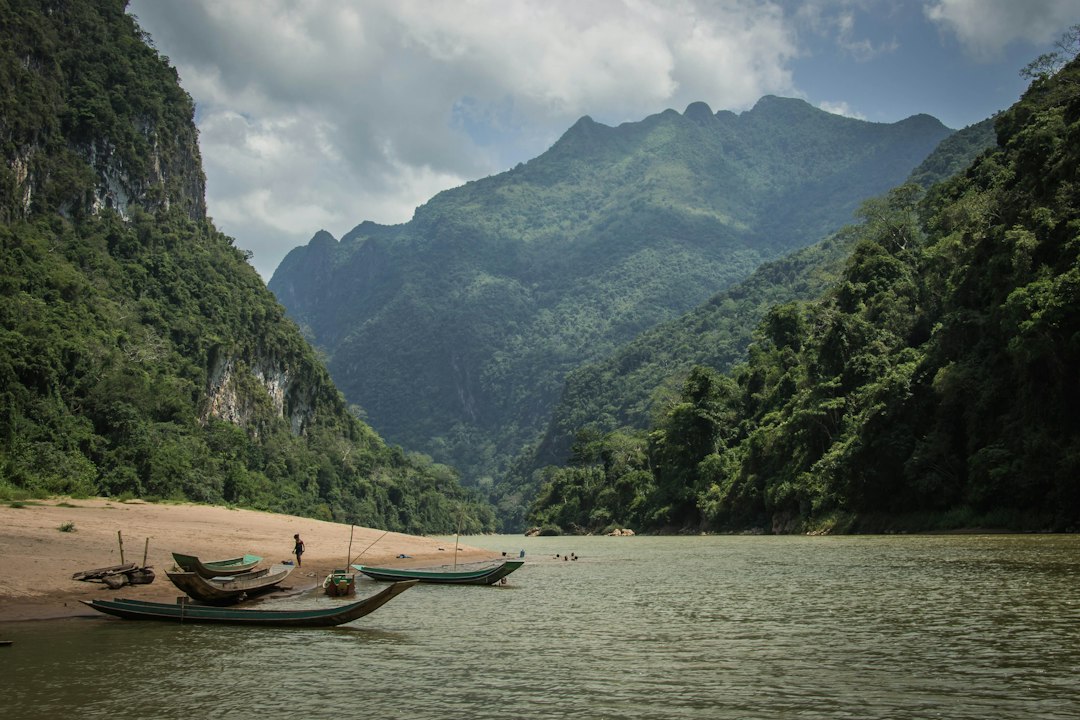
Illustrative river journey, not advice about a particular swimming area. Check boarding arrangements, safety equipment and the return journey.
Before a more remote stage
Question
What to have agreed
How would we reach help?
Your accommodation address, a named contact and available transport, not just the name of the nearest town.
How will we stay in contact?
A way to communicate without mobile data, and a meeting point or plan if the connection fails.
What does our insurance cover?
Confirm cover for activities, medical transfers and evacuation if needed.
What should stay accessible?
Personal medicines, suitable storage, active-ingredient details and relevant medical information.
Ask what an ‘easy’ hike involves: Check walking time, elevation, steps, places to turn back and return transport. Explain whether you regularly walk longer distances or would prefer a shorter option. Choosing a comfortable pace is part of good trip planning.
After a health problem: Record where you stayed, what you did and when symptoms began to help the clinician. After an animal bite or with worsening symptoms, arrange medical assessment rather than simply continuing to the next stop. After returning home, mention your Laos trip and any relevant activities or exposures.
Health sources reviewed on 27 October 2026. This guide does not replace individual advice or emergency medical care.
Medicines and emergency documents
Prepare a personal travel health kit and check import rules for restricted medicines. Keep active-ingredient information and any required letters easy to access. Plan storage for heat and long transfer days. Bring an appropriate supply rather than relying on finding an unchecked replacement locally.
Save insurance details, emergency contacts and essential health information offline. Make sure your companion knows where to find them. Tell your travel support team what they need for practical arrangements while keeping unnecessary personal medical details private.
Check care and insurance arrangements in advance
Access to medical services is limited in some regions, and a complex emergency may require a transfer. Check evacuation and repatriation terms explicitly before you travel. Source: German Federal Foreign Office — medical facilities.
Urgent or worsening symptoms take priority over continuing a journey. After returning home, tell your clinician about the places and activities on your trip. We can support arrangements and itinerary changes; diagnosis and treatment remain with qualified medical professionals.
Flights to Laos: Choose Connections That Fit Your Journey
For a Laos journey, sketch the route on the ground first, then compare flights that fit it. A low fare may be less practical once you add backtracking or tight connections. Consider the whole journey from your first departure to your final accommodation.
Match the arrival point to your itinerary
Decide whether to begin in Luang Prabang, Vientiane or southern Laos. Check available services for your dates with the airline, for example the official Lao Airlines website or the airline operating your flight. Routes and frequencies can change.
VTE, LPQ or PKZ: where should you begin?
Airport
A useful starting point for
Keep in mind
VTE – Wattay, Vientiane
A journey beginning in the capital.
Travelling onwards to Luang Prabang is a separate stage, not part of the airport collection.
LPQ – Luang Prabang
A stay focused on Luang Prabang and its surroundings.
On a short visit, you do not automatically need to add the capital too.
PKZ – Pakse
A journey focused on southern Laos.
Check available flight days and onward road transfers together before booking.
Airport codes and locations: Lao Airlines. These examples do not guarantee a particular direct flight or daily service.
Plan the arrival airport and ground itinerary together. Illustrative photograph, not a specific airport in Laos.
An example for a short extension: If you would like four nights in Luang Prabang after Vietnam, compare an available flight to LPQ with arriving in Vientiane and travelling onwards. Time at the destination and total cost matter more than the lowest airfare alone.
Compare two flight options side by side: List local departure and arrival dates, airports, number of connections, checked baggage, separate or through-tickets, any hotel night needed and change conditions. Mark where you must collect bags or check in again yourself.
Check flights, rail travel and borders separately: An international train or road journey may be an alternative, but needs its own confirmation of the border crossing and documents. An e-visa is not accepted automatically simply because the final destination is unchanged. On the return journey, leave a buffer between a long river stage and an international flight.
Choose connecting flights thoughtfully
Distinguish one through-booking from separate tickets. Ask whether bags are checked through and whether you must leave the transit area. Check the airport and terminal carefully: the city name alone is not enough to judge a connection.
Allow for immigration, baggage collection, another check-in and security checks, rather than only the scheduled gap between flights. On separate tickets, an overnight stay may be the more reliable option. The appropriate transfer time depends on the actual connection.
Match entry documents to your connection
Your e-visa must be accepted at the entry point you will actually use. The official Lao eVisa portal lists eligible checkpoints. Check additional arrival or departure forms separately. If you spend a night outside the transit area, also check the rules for the country where you stop.
Combining Laos with Vietnam or Thailand
Put your chosen destinations in a sensible order and remove unnecessary backtracking. Then compare flights, confirmed overland options and, where relevant, trains. A short line on the map may involve more organisation than expected. Every additional border needs its own document check.
A multi-country trip is often more comfortable with one clear focus in each country. A short Laos extension does not need to cover every region. Use the time for a rewarding stay rather than moving on every day.
Baggage and your first hotel
Check baggage weight, dimensions and special luggage for every flight. For an early arrival, agree on room availability or a gentle start to the programme. Give our team the full flight number, date and local time. A screenshot without an airport code or date may not provide enough detail for reliable collection.
Leave time before the flight home
Avoid placing a long road or river journey immediately before your international flight without a buffer. Compare an extra night in your departure city with the risk of a tight connection. Before travel, recheck fare conditions, flight changes and confirmed transfers so the journey fits comfortably into your tour.
Practical Laos Travel Tips: Money, Temples, Internet and Getting Around
Laos is especially rewarding when you leave some time unplanned. A little organisation around money, documents and transfers makes that slower pace easier to enjoy. These tips help with everyday travel and complement the specific information in your booking.
Keep your spending money separate from a reserve. Check which meals, entrance fees and activities are included in your booking. A simple list of personal expenses helps avoid misunderstandings. Check change and receipts at the time rather than leaving questions until the next stop.
Respect temples and religious life
Follow guidance at each site and ask your guide about suitable clothing and behaviour. Religious ceremonies are not performances for visitors. Keep a respectful distance, leave paths clear and ask permission before photographing people. Quiet observation is often more considerate than a close-up photograph.
If you would like to take part in an activity, ask what is involved beforehand. Joining in without understanding the setting can be inappropriate. Tell us if you prefer to learn about culture through conversation and longer visits rather than quick photo stops.
Keep useful information offline
Compare SIM, eSIM and roaming options with your phone and data needs in mind. Save addresses, meeting points and documents offline, and agree how to contact your travel support team without mobile data. On arrival day, a charged phone and an easy-to-find hotel address are often more helpful than a collection of travel apps.
A compact offline folder for Laos
What to save
Why it helps
Hotel address, phone number and a map
So you can find your way back without mobile data.
Your next meeting point and pickup time
So important details do not disappear into a long chat history.
Travel support and insurance contacts
So you know whom to contact if plans change or a problem arises.
Included services and personal expenses
So meals, entrance fees and optional outings are not overlooked or paid for twice.
Documents for your next entry or departure
So a border crossing stays visible as a separate preparation task.
This is a personal organisation checklist. Store sensitive documents securely and share them only through confirmed channels.
Illustrative river journey. The pier, luggage arrangements and final walk or transfer to your accommodation all form part of the travel day.
Before a rural stay: Estimate the cash needed for expenses that are not included, and keep a small reserve separately. Do not assume that cards or cash machines will be available. Have suitable small denominations for everyday purchases; exchange rates and bank fees should be checked at the time rather than treated as fixed.
Observe religious life quietly: During morning almsgiving, keep your distance, leave the route clear and never step between participants for a photograph. Before participating, ask a knowledgeable local guide about appropriate conduct. A ceremony should not be interrupted or repeated for visitors.
A packing detail to check: Official Laos travel guidance states that e-cigarettes and vaping devices are prohibited, including import and possession. Check export rules before buying souvenirs too; a seller’s assurance is not official customs clearance. Source: German Federal Foreign Office — local laws and customs, reviewed on 27 October 2026.
Before your final transfer: Review the departure time, meeting point, luggage, last meal and arrival address together. Add another stop only if it offers an experience you value, rather than filling all your remaining time with travel.
Plan stages around experiences, not distances
A short line on a map says little about a full transfer day. Pickup, checkout, breaks and arrival arrangements all take time. Ask what each additional stop contributes to your holiday. Several nights in one place leave space for changing weather and unexpected interests.
Choose what you carry carefully
Check current customs and safety rules before packing, particularly for medicines and specialist equipment. Do not carry someone else’s luggage without knowing its contents. Before buying souvenirs, check whether they may legally be exported. Use the responsible authorities and official travel guidance for confirmation.
Local visits and encounters
For village or craft visits, ask about the people involved, how the visit works and whether they welcome it. Avoid experiences that treat people simply as a backdrop for photographs. A genuine conversation or a thoughtful purchase can be more personal than a rushed group stop. Tell us your interests so the itinerary reflects them.
The final arrangements
Review pickup times, dietary needs, room preferences and rest breaks together. Agree how changes will be confirmed and whom to contact with questions. A well-organised trip need not schedule every minute; it should give you confidence and space to discover Laos at your own pace.
YOUR CHOICE
Your privacy matters
Essential cookies keep this website working. With your permission, we also use analytics and marketing services to understand visits and measure advertising. You can choose these separately in settings and change your choices at any time.