Vietnam Visas and Entry Requirements: A Practical Guide
Whether you are heading to Hanoi, Hoi An or the Mekong Delta, a smooth Vietnam holiday starts with the right travel documents. Entry rules depend on your nationality, passport type, reason for travel, length of stay and each planned entry. Check the rules for your own passport; the German passport examples below do not apply automatically to other travellers.
Visa-free entry or an e-visa?
Some nationalities qualify for visa-free entry. For example, Vietnam’s Consulate General lists stays of up to 45 days for eligible German passport holders, counting both arrival and departure days. The passport must remain valid for at least six months on arrival. Have evidence of your return or onward journey ready, and confirm the conditions for your nationality before booking. Immigration authorities make the final entry decision. Source: Vietnam Consulate General.
For longer stays or journeys that do not qualify for visa-free entry, an e-visa may be suitable. Vietnam offers e-visas valid for up to 90 days, with single-entry and multiple-entry options. Check the category and the dates actually granted on the official portal rather than assuming every application receives the maximum period. Source: official Vietnam e-visa portal.
Three itineraries, three document checks
Your itinerary
What to check
Hanoi–Hoi An–Ho Chi Minh City, 21 days
Check whether your nationality qualifies for visa-free entry and whether its permitted stay covers the whole trip. Otherwise, arrange the appropriate visa before travelling.
A stay longer than your visa-free allowance
Arrange a suitable visa before departure. Match its approved start and end dates to your complete stay.
Vietnam–Cambodia–Vietnam
Record both entries into Vietnam. If using an e-visa, check the permitted number of entries; prepare Cambodia’s documents separately.
These examples explain how to plan your documents, not a guarantee of admission. For the German passport example, see the Vietnam Consulate General.
Count your days carefully: Arriving on 1 March and leaving on 21 March means 21 days in Vietnam, not 20. Use your local entry and departure dates, rather than the date your flight leaves home. Allow some flexibility before your permitted stay ends in case your flight changes.
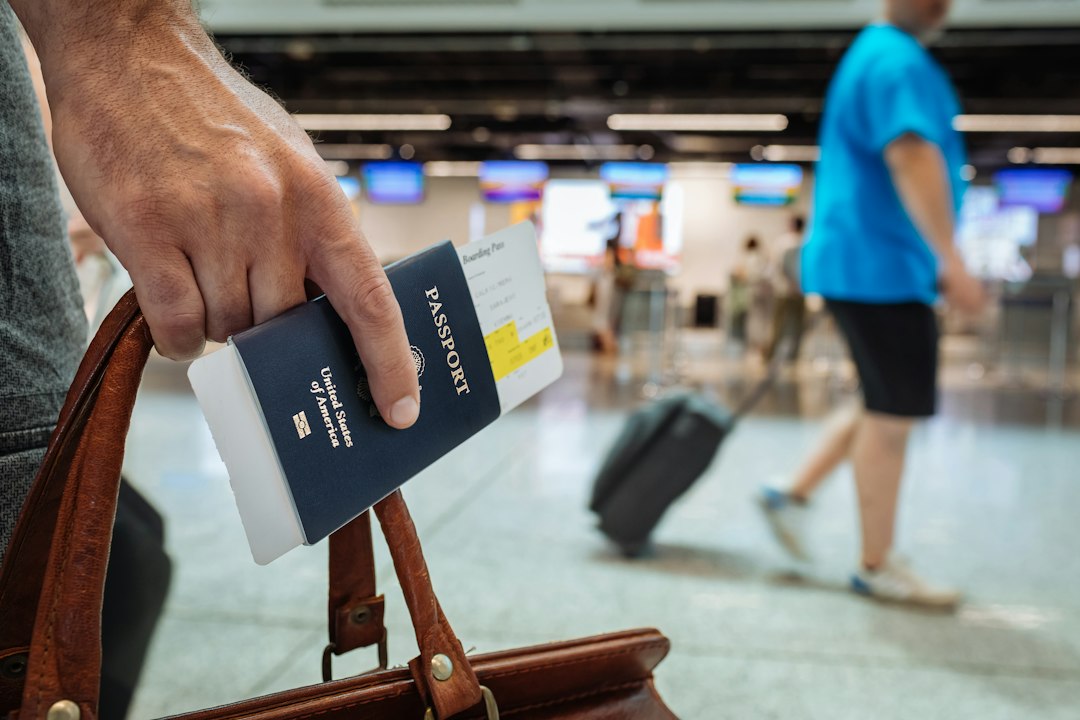
Check your passport, visa approval and flights together. Illustrative photograph, not a sample Vietnamese visa.
Keep an offline travel folder: Save clearly named copies of your passport, approved visa if required, return or onward flight, and first hotel address. Keep your application reference separately too. A passport copy does not replace the original. Share full passport details only through the confirmed secure channel intended for that purpose.
Prepare your application
Gather your passport details page, travel dates, first accommodation and planned entry and departure points. Open the official e-visa portal through a government link and check the web address carefully. A search advert or an official-looking name does not prove that a website belongs to the authorities.
Enter your name and passport number exactly as instructed. Before paying, compare every field with your passport, not just your flight booking. Save the application reference, payment receipt and, once issued, your approval. A submitted application or payment receipt is not a visa. Apply with time to spare in case further information is requested.
Combining Vietnam with Cambodia or Laos
List your journey as a series of border crossings. Vietnam–Cambodia–Vietnam involves two separate entries into Vietnam, each of which needs the appropriate permission. Check whether visa-free entry applies again or whether your visa allows another entry. Vietnam’s documents do not replace the documents required by Cambodia or Laos.
If your route changes, review the entry point, validity dates and permitted number of entries as well as hotels and transport. Before booking a land crossing, confirm that it is open and accepts your visa type. Our team can help organise the route; the relevant authorities provide binding entry information.
Check any additional pre-arrival registration
Vietnam’s official e-visa website also links to an electronic pre-arrival declaration. Check the current instructions for your arrival point before flying. This registration is separate from your visa or eligibility for visa-free entry. Use the official pre-arrival portal and follow its current instructions; do not assume that the same procedure applies at every border crossing.
Before you fly
Check passport validity and the spelling of every traveller’s name.
Count both arrival and departure days in your stay.
Keep approved documents and your onward travel booking available offline.
Check the requirements separately for children and each person travelling.
Review every entry whenever your route changes.
Frequently asked questions about entering Vietnam
Do I need a visa for a 14- or 21-day holiday?
It depends on your nationality and passport. A short holiday is not automatically visa-free for everyone. Check your eligibility and the permitted stay before travelling; for eligible German passport holders, the published visa-free allowance is up to 45 days. Source: Vietnam Consulate General.
How much passport validity do I need?
Check the requirement for your nationality, passport type and entry category. The published visa-free conditions for German passport holders require at least six months’ validity on arrival. Do not assume the same rule covers every special travel document or visa category. Source: Vietnam Consulate General in Frankfurt.
When should I apply for an e-visa?
Consider an e-visa if your nationality is not visa-exempt or your trip exceeds the allowance that applies to you. E-visas can be issued for up to 90 days, for one or multiple entries. Apply through the official Vietnam e-visa portal and check the dates and number of entries actually approved.
What if I return to Vietnam after visiting Cambodia or Laos?
Treat the return as a new entry and check your eligibility again. If travelling on an e-visa, its validity and permitted number of entries must cover your return. If relying on visa-free entry, confirm the current conditions for your passport. Neighbouring countries have separate entry rules. Source: Vietnam Consulate General — visa and entry guidance.
Reviewed on 27 October 2026. Recheck official information shortly before departure; Vietnamese immigration authorities decide whether entry is granted.
Best Time to Visit Vietnam: Choose the Right Months for Your Route
There is no single best month to visit Vietnam. A journey through Hanoi, Hoi An and the Mekong Delta crosses different climate zones. Rather than looking for the perfect date for the entire country, ask yourself which experiences matter most and where you would like to spend most of your time.
Three regions, different seasons
In the north, winter days can be cool and misty, while summers are often hot and humid. Spring and autumn are popular choices for Hanoi and the mountain regions. Central Vietnam has a different rainfall pattern: Hue and Hoi An can experience particularly heavy rain in autumn. The south stays warm, with conditions often drier from around December to April. These are climate patterns, not weather guarantees. Source: Vietnam Tourism.
When to visit each region
Destination
General guide
Planning considerations
Hanoi and Halong Bay
April–June and September–November
Summer rain and storms can affect boat trips.
Sapa and the mountain regions
Spring and autumn
Winter can be cold and misty; check visibility and trail conditions.
Hue and Hoi An
Especially spring through summer
Autumn rain; wet conditions can last longer in Hue than in Hoi An.
Ho Chi Minh City and the Mekong Delta
December–April is often drier
Warm year-round; take the rainy season into account when planning excursions.
Phu Quoc
Especially December and January
Stormy summer months may restrict beach and boat plans.
A broad climate guide, not a weather guarantee. Source: Vietnam Tourism.
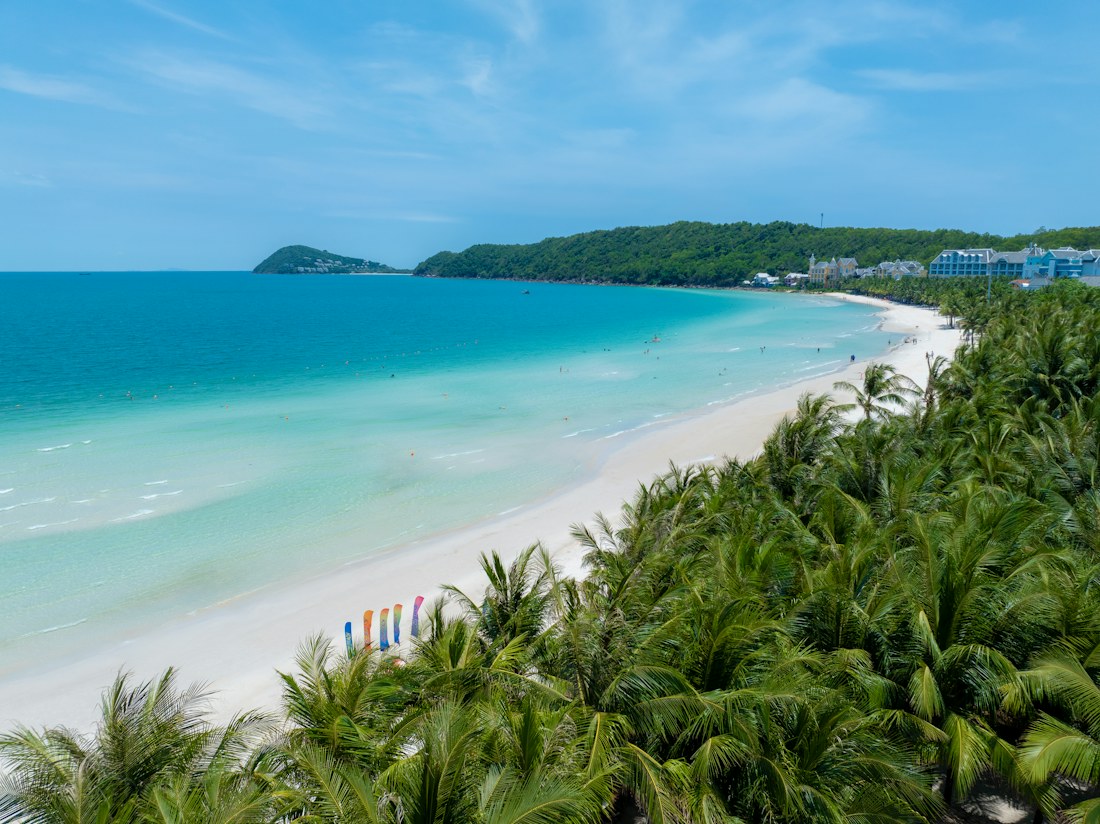
Phu Quoc: When adding a beach stay, check the island’s seasons separately rather than using Hanoi’s weather calendar. This photograph does not promise particular weather.
Which route suits your holiday month?
Your travel window
Our planning suggestion
Important trade-off
January or February
Combine cities and culture with an emphasis on the south; consider Phu Quoc for a beach stay.
Pack warm layers for Hanoi and the mountains. Northern Vietnam is not necessarily a warm winter destination.
July or August
If your summer holiday dates are fixed, compare options centred on Hoi An and the central coast.
Plan rainy-day alternatives in the north; check conditions before adding Phu Quoc as a beach extension.
October or November
Prioritise northern Vietnam and, if appropriate, the south.
Plan Hue and Hoi An particularly carefully because of their autumn rainy season.
For a two-week trip: Choose two main regions with a short additional stop rather than spending only one night in every part of the country. Identify one essential experience and one activity you could replace. For example, if a Halong Bay cruise is your priority, allow flexibility in the surrounding days. If the beach matters most, choose the right coastline first, then plan the remaining stops.
What a “rainy-day alternative” means: A cooking class instead of a bicycle ride may make sense. However, a serious severe-weather warning may require moving to another region or omitting that stage entirely. An indoor activity does not make an unsafe transfer safe.
A planning framework for the year
December to February: Pack for different conditions in the north and south. If warmth is your priority, focus further south. March to May: Consider a balanced itinerary, with breaks during the hottest parts of the day. June to August: Plan weather-flexible activities and assess beach destinations individually. September to November: Pay particular attention to mountain days and stays on the central coast. When storm warnings are issued, local safety advice takes priority over any itinerary.
Mountains, a cruise or the beach?
For hiking in Sapa or Ha Giang, visibility, trail conditions and altitude matter more than Hanoi’s average temperature. Tell us whether you prefer short walks or more demanding hikes. Rice-field colours also depend on the local growing cycle; a particular photographic scene should not be treated as a guaranteed outcome of your trip.
For a Halong Bay cruise, permission from the authorities is essential. Avoid placing the cruise immediately before a separately booked long-haul flight without any buffer. For beach days, distinguish between the central coast and Phu Quoc: the same holiday month can bring very different conditions in these two places. Discuss your travel dates before choosing your preferred beach hotel.
Is it worth travelling in the wetter season?
A rainier season does not mean every day will be a washout, but it does call for alternatives. Combine outdoor activities with museums, cooking classes or other less weather-dependent experiences. Leave room to move individual excursions. In regions at risk of flooding or landslides, changing plans is a safety decision, not simply a matter of comfort. Current natural-hazard and safety advice.
How to choose your travel dates
Rank your priorities: scenery, beaches, culture, food or hiking. Then mark the places you do not want to miss. If school holiday dates are fixed, we can adapt the regions to your dates. If your holiday is flexible, you can choose dates that suit your preferred route. Fewer changes of location are often more enjoyable than trying to cover the entire country regardless of the weather.
Packing and a final weather check
Several light layers, rain protection and a waterproof cover for documents are useful. For mountain days, choose footwear suited to the planned terrain. Check local forecasts shortly before each stage, rather than relying only on a country-wide overview weeks before departure. This seasonal guide provides orientation; short-term warnings and local assessments determine the actual day’s programme.
Food and Drink in Vietnam: A Journey from North to South
Food is a wonderful way to get to know Vietnam. As you travel, take time to discover regional differences rather than simply ticking off famous dishes. A local breakfast, a market visit and a shared meal can reveal different sides of the same place. Give them room in your itinerary alongside temples and landscapes.
Let local dishes guide your journey
Phở pairs rice noodles with aromatic broth, while Bún Chả is especially associated with Hanoi. In Hue, try Bún Bò Huế; in Hoi An, look for Cao Lầu. Bánh Mì, Bánh Xèo and fresh rolls add further variety. Recipes and accompaniments differ between kitchens, so ask what is on the table rather than assuming a dish’s name tells you every ingredient. Source: Vietnam Tourism – dishes and regional food.
Six dishes to start with
Dish
What to expect
A useful detail to check
Phở
Rice noodle soup, often served with beef or chicken.
Ask about the broth and meat, then add herbs and seasoning gradually.
Bún Chả, Hanoi
Grilled pork, rice noodles, herbs and a dipping sauce.
Several bowls make up one dish; the dip may contain fish sauce.
Bún Bò Huế
A richly flavoured noodle soup from Hue.
Check the meat ingredients and level of spice before ordering.
Cao Lầu, Hoi An
Noodles with pork, greens and crisp toppings.
A regional speciality to compare with Vietnam’s noodle soups.
Bánh Xèo
A crisp rice-flour pancake, often filled with pork and prawns.
Check the filling and dipping sauce separately for allergens.
Gỏi Cuốn
Fresh rice-paper rolls, often with herbs and prawns or meat.
Fillings and sauces vary; ‘fresh’ does not automatically mean vegetarian.
Dish descriptions draw on Vietnam Tourism. Recipes vary, and this table is not a complete allergen list.
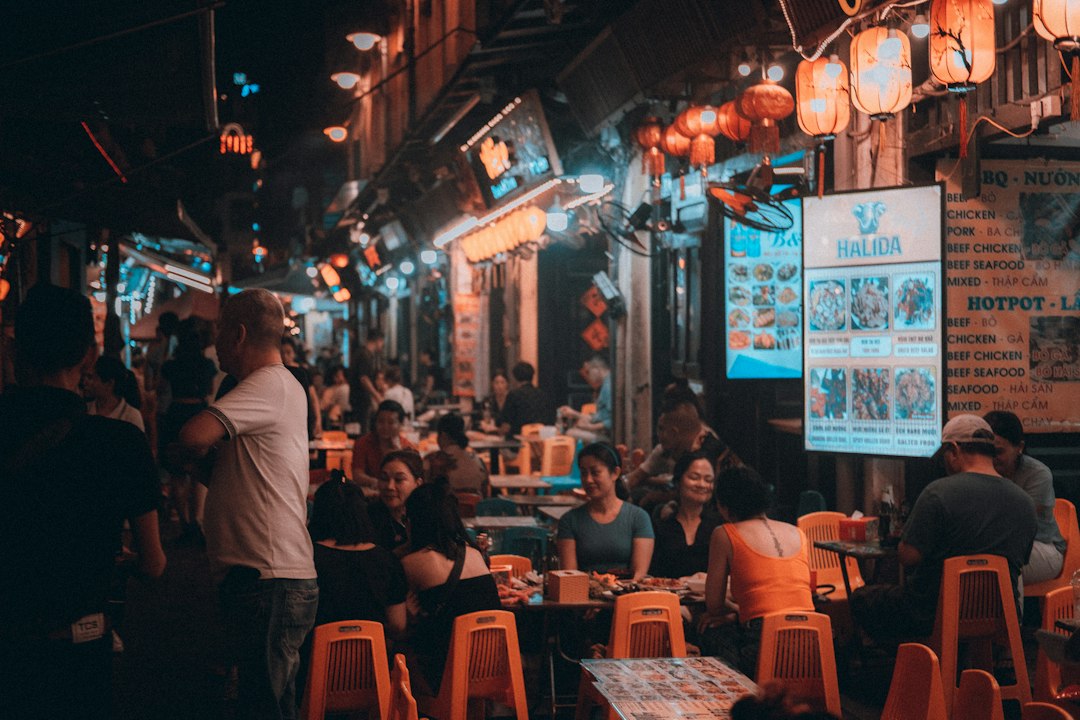
Street food in Hanoi: ask about seating, walking distance and portion sizes before choosing a food tour.
Ordering at a comfortable pace: Start with one main dish per person, or two smaller dishes specifically ordered to share. Ask for chilli and extra dipping sauces on the side. Taste the dish before adding more seasoning. If you have an allergy, the kitchen needs to check the full recipe; serving a sauce separately does not reliably remove the risk.
Know what is included: For a food tour, ask about dishes, drinks and the number of stops. For a cooking class, also check transfers, a market visit, menu adjustments and recipes to take home. This helps you compare the experiences themselves as well as the total price.
Enjoy street food without rushing
A guided food walk with a few carefully chosen stops is a good introduction. Ask about duration, walking distance, portion sizes and seating. After a long flight, a shorter evening outing may be more enjoyable than the fullest programme. An early, manageable start leaves time to taste, talk and ask questions.
A cooking class and a street-food tour offer different experiences. A walk introduces the rhythm of a neighbourhood; cooking gives you more time with ingredients and techniques. On a longer journey, both can work well together. Check whether a market visit means sightseeing or shopping for ingredients with your host.
Vegetarian, vegan and allergy-aware travel
Describe your dietary needs precisely: no meat, no fish, no fish sauce, no eggs and no dairy are different requests. Broths, dips and garnishes matter too. Prepare a short translated list of ingredients to avoid and show it before ordering. For a severe allergy, removing a visible ingredient is not enough; cross-contact also needs to be discussed.
Tell our team before travelling which ingredients must be strictly excluded and which you simply prefer to avoid. We can help prepare conversations with hosts, but cannot guarantee an allergen-free environment everywhere. If you have significant allergies, discuss a personal emergency plan with your clinician before travel.
Make time for drinks and relaxed breaks
A coffee stop can be an experience in its own right. Ask about sweetness, milk and caffeine, particularly for children or anyone with intolerances. Drinking water and ice should come from a reliable source. Choose food that is freshly and safely prepared, and avoid risky raw products. Source: CDC – food and drink advice.
An idea for a day of food discoveries
Start with a simple local breakfast. Pair the morning with a market or craft neighbourhood, then leave time for a longer break. In the evening, choose a small selection of dishes to share and compare. This is inspiration rather than a fixed package: your pace, preferred dining style and interest in cooking shape the day.
What to tell us before you travel
Share your favourite foods, tolerance for chilli, allergies, vegetarian or vegan requirements and any mobility limitations. Let us know whether you prefer sitting down for an unhurried meal or trying several small stops. These details help make food a personal pleasure throughout your journey.
Vietnam Travel Health: Practical Preparation for Your Holiday
A Vietnam holiday can include city days in Hanoi, a cruise, walks around Hoi An and hikes in the mountains. Health preparation should reflect that variety as well as your own needs. This guide helps you plan; it does not replace an examination, diagnosis or personal advice from a travel health professional.
Bring your itinerary to your travel health appointment
Arrange an appointment well before departure if possible. Bring your vaccination record, medication list and outline itinerary. Your clinician will consider the length of your stay, rural overnight stops, activities and personal health, as well as the destination. Discuss routine vaccinations and any additional travel vaccinations individually. Source: CDC Vietnam travel health guidance.
Ask whether planned activities suit your health and fitness. A visit involving many steps, a long boat trip and a hike far from medical care place different demands on you. Let us know about practical adjustments early, while sharing sensitive medical information only with people who need it.
Mosquitoes, sunshine and heat
Plan consistent protection against mosquito bites; dengue is among the travel health risks covered in official guidance. Suitable clothing and insect repellent work together. Choose and use repellent according to the label and personal advice, especially for children or sensitive skin. Ask your clinician whether your particular route calls for further precautions. CDC: mosquito protection and travel health.
Leave room to rest: start outdoor activities early, take shaded breaks and allow time for meals and drinks. Avoid scheduling several demanding activities back to back. After a long flight, a gentle first day is often more enjoyable than the longest excursion. Set the pace around your needs.
Food, drinking water and hygiene
Choose safe drinking water and food that has been prepared hygienically. Wash your hands, favour thoroughly cooked food served hot and take care with raw ingredients. A busy stall does not by itself guarantee food safety. If you become unwell, seek advice rather than combining medicines without checking. CDC: staying healthy and safe.
A simple preparation checklist
When
What to do
Ideally at least a month before departure
Arrange a travel health consultation. Bring details of overnight stops, walks, travel dates and previous vaccinations. Even if you book late, it is still worth seeking advice.
Before packing
Prepare personal medicines in their original packaging, an active-ingredient list and any required letters. Check import rules and storage needs separately.
In your day bag
Keep necessary medicines, basic wound-care supplies, hand hygiene items, sun protection and suitable insect repellent accessible.
Before a rural stay
Note the nearest suitable medical facility and your insurer’s emergency contact, and agree how transport would be arranged.
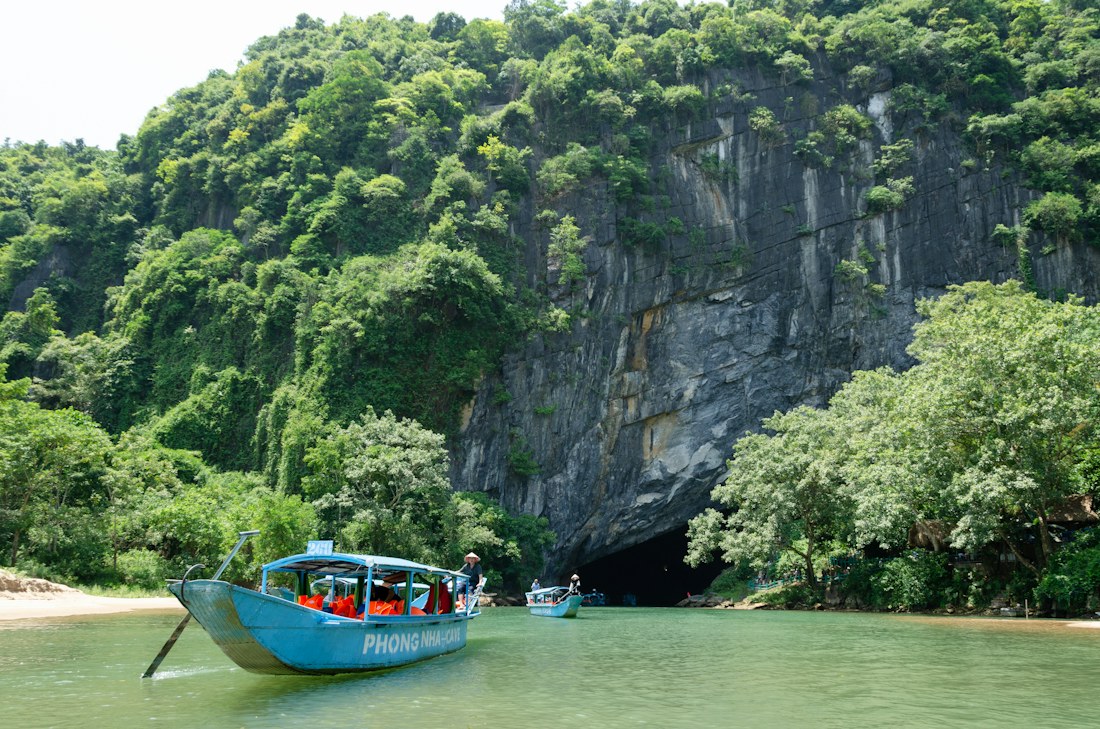
For nature outings around Phong Nha, consider the walking distance, physical demands and route back to your accommodation as well as the sights.
A useful emergency information sheet: Record your name, date of birth, allergies, regular medicines by active ingredient, insurance details, emergency assistance number and contact person. Keep an offline copy on your phone and another easy to find in your luggage. Share only the information needed for care and practical arrangements.
Animal bites or scratches: Wash even a small wound thoroughly with soap and water for at least 15 minutes straight away, and seek urgent medical assessment for possible rabies exposure. Do not wait for symptoms. Seek assessment even if you have had preventive rabies vaccination. Guidance: WHO — rabies and care after animal contact.
Health sources reviewed on 27 October 2026. This is a preparation guide, not a personal vaccination, medication or treatment plan.
Medicines and supporting documents
Prepare a personal packing list with your doctor or pharmacist. Include regular medicines, active-ingredient details and any letters needed to carry them. Check import requirements for restricted medicines separately. Follow storage instructions and account for heat and long transfers when packing.
Keep essential information available without internet access: insurance details, emergency contacts, medication information and your travel support contact. Decide who should be informed in an emergency. Your travelling companion should know where to find these documents.
If symptoms are acute or getting worse, medical care comes before the itinerary. After returning home, tell your clinician where you travelled and about relevant activities or exposures. Our team can help with arrangements, while clinical decisions remain with qualified professionals.
Flights to Vietnam: Plan Your Arrival, Connections and Tour Together
The cheapest flight is not always the best starting point for a tour. Your arrival airport, landing time and return flight affect how much time you spend travelling rather than enjoying your destination. Plan the route and flights together, instead of trying to fit a long wish list between two flights already booked.
Which arrival airport suits your trip?
For many Vietnam journeys, Hanoi in the north and Ho Chi Minh City in the south are convenient starting points. Da Nang serves central Vietnam. Check international connections for your actual dates directly with the airline, as schedules can change. Vietnam’s tourism authority describes flying as one way to cover the long distances between regions. Source: Vietnam Tourism.
Airport codes for planning your route
Airport and code
Useful for
Planning tip
HAN – Noi Bai, Hanoi
Hanoi, Ninh Binh, Halong Bay and northern Vietnam
Allow separate transfers for mountain or cruise stages; landing at the airport is only the start of that journey.
DAD – Da Nang
Da Nang and Hoi An, with onward travel through central Vietnam
Hoi An has no airport of its own. Confirm your collection point and destination hotel.
SGN – Tan Son Nhat, Ho Chi Minh City
Ho Chi Minh City and the Mekong Delta
For each onward flight, check the airport, terminal and whether you need to collect and check in your bags again.
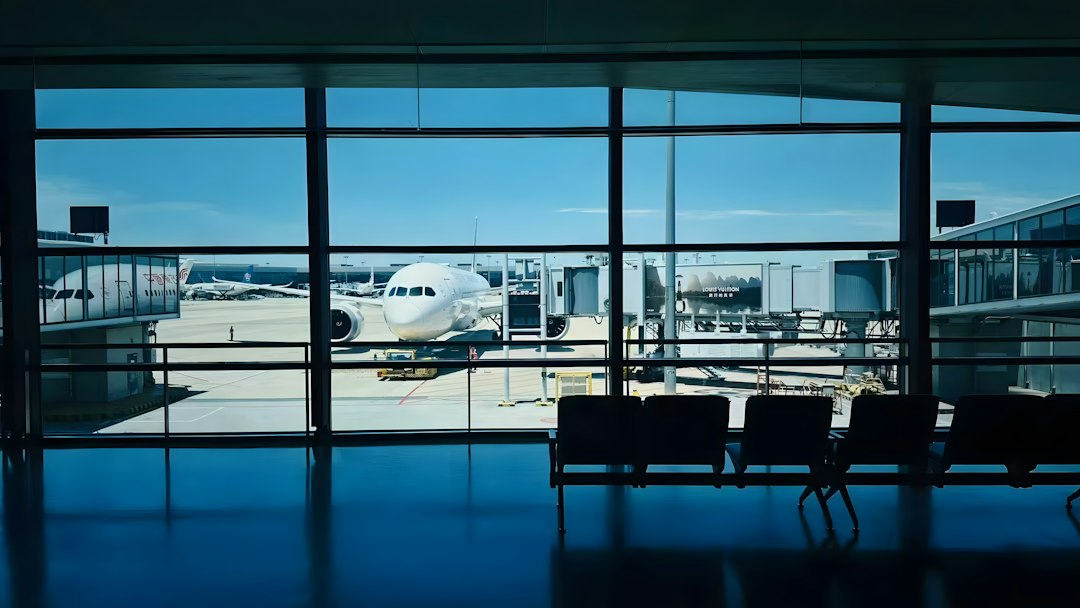
A connection involves more than flying time. Illustrative photograph, not a particular Vietnamese airport.
A route with less backtracking: For a north-to-south journey, compare arriving at HAN, travelling through central Vietnam and flying home from SGN with a return ticket through Hanoi. Add the extra journey back, possible hotel night and transfers to the second option. The cheaper long-haul ticket may not produce the cheaper trip overall.
Five details help us make an initial comparison: your full flight number, local arrival date, airport code, number of travellers and any connections booked on separate tickets. Add special luggage requirements and your preferred first hotel. Check overnight flights carefully: the arrival date may differ from the date you leave home.
Fly into one city and home from another?
An open-jaw itinerary might arrive in Hanoi and depart from Ho Chi Minh City, avoiding an extra journey back within Vietnam. Compare the whole trip: domestic flights, hotel nights, transfers and the holiday time available. A journey focused only on the north does not necessarily need two different international airports.
List the places you want to visit in geographical order and remove avoidable backtracking before comparing flights. When combining Vietnam with Laos or Cambodia, a different finishing point may make sense. The connection still needs to be available on your dates, and your entry documents must fit every stage.
Connecting flights: check how the tickets are booked
Distinguish a through-booking from separately purchased tickets. Before buying, ask whether baggage is checked through, whether a terminal change is needed and who assists if a delay disrupts the connection. Flying time alone does not show the transfer time required: immigration, baggage collection and another security check may be involved.
Allow generous buffers for connections you put together yourself. A tight sequence of cruise, long road transfer and international flight is vulnerable to disruption. A final night near your departure city can make the journey more relaxed. The right buffer depends on the actual route; no single connection time works in every situation.
Baggage and domestic flights
Compare checked baggage, cabin baggage, dimensions and extras for every flight. A generous allowance on an international ticket does not automatically apply to a separately booked domestic flight. Check special luggage, pushchairs and mobility aids early. The conditions of your booking and operating airline apply.
Your first and last holiday days
If you arrive early, your hotel room may not yet be available. Agree in advance whether to book an extra night, arrange early check-in or plan a gentle start. On departure day, fit sightseeing around the actual collection time. Give our team full flight numbers, dates and local times, rather than only the cities.
Before confirming your flights
Check name spelling, passport details, travel dates, airports and fare conditions. For current connections, consult the official Vietnam Airlines website or your chosen airline. Timetables and prices can change. Confirm the overall trip after checking that your flights and ground itinerary work together.
Practical Vietnam Travel Tips: Money, Internet, Packing and Everyday Life
Once the main trip is planned, practical questions often follow: how will you pay, what should go in your day bag, and how will you communicate with local hosts? These tips complement your travel documents and help make everyday arrangements easier.
Money and payments
Vietnam’s currency is the Vietnamese dong. Cards are not accepted everywhere, and cash remains useful outside larger cities. Use authorised exchange services and check fees with your bank. Source: German Federal Foreign Office – money and cards.
Keep a small amount for the day and store your payment methods separately. Check the amount on the screen before confirming a payment. Smaller notes are easier for everyday purchases than very large ones. Before travelling, list what your tour includes and what you will need to pay for yourself.
Six useful tasks on your first day in Vietnam
Confirm your collection: Match the name, meeting point and contact details to your confirmed travel documents. Do not leave with someone simply because they name a hotel.
Save your hotel address: Keep the street, building number, phone number and a map section available offline.
Organise your cash: Separate daily spending money from your reserve. Read each note carefully: 50,000 and 500,000 dong differ by a factor of ten.
Test your connection: Send a message to your travel contact. If you need mobile data, check that it works without hotel Wi-Fi.
Confirm the next morning: Note your collection time, breakfast arrangements and first destination.
Leave room to rest: Avoid filling arrival day with several fixed activities.
For free time in Hoi An, a saved hotel address and clear meeting point can be more useful than a minute-by-minute schedule.
Build a budget around your actual trip: Make three columns: included, paid separately and optional. Add meals, drinks, admission fees, independent excursions and personal shopping. For tipping, ask who will be supporting your trip and request guidance for that particular team, rather than assuming one daily figure applies to every tour.
Before buying an eSIM: Check that your phone supports eSIM and is unlocked. Read whether the plan starts at purchase, installation or first network use, as this varies. Arrange activation while you still have an internet connection, rather than waiting until you are at a meeting point.
SIMs, eSIMs and offline information
Compare roaming, a local SIM and an eSIM against your needs. Check device compatibility, data allowance, validity and whether calls are included. Ask the provider to explain registration and activation. Download hotel addresses, meeting points and important documents for offline use too, so finding your driver or hotel does not depend entirely on mobile data.
Temples, photographs and local encounters
Follow guidance at each site and ask permission before photographing people. Light clothing to cover shoulders and knees makes visits to religious places easier. A local guide can explain when photography, entry or touching an object is inappropriate. Give people and places time and space rather than assuming every scene is available for a photograph.
Meetings with local hosts should fit naturally around their lives. For village visits, ask about the arrangements and residents’ consent. Where possible, buy crafts from places that can explain who made them. Leave room for conversation: these exchanges can make a personal journey more memorable than adding another stop.
Plan transfers realistically
Look beyond the distance. Traffic, breaks and rural roads affect travel time. Vietnam’s tourism authority describes several ways to get around, including trains, planes and boats. Source: Vietnam Tourism – transport.
Tell us if you want to avoid long driving days, are travelling with children or need more frequent breaks. Prepare essentials the evening before an early start. Documents, water, necessary medicines and weather protection are easier to reach in a small day bag than in your main suitcase.
Packing and restricted items
Before packing, check current customs and safety guidance, particularly for medicines and electronic cigarettes. Official travel advice states that vapes and related products are banned in Vietnam. Use the current official guidance for restrictions and updates. Current travel advice.
The final check with your travel team
Before departure, go through the services booked, meeting points and how changes will be communicated. Discuss tipping, dietary needs and room preferences clearly. A useful itinerary leaves flexibility while showing who will meet you, when activities take place and where you have free time.
YOUR CHOICE
Your privacy matters
Essential cookies keep this website working. With your permission, we also use analytics and marketing services to understand visits and measure advertising. You can choose these separately in settings and change your choices at any time.