

A food-focused journey through Laos rewards time for explanations and local encounters. A market visit, a shared meal and a cooking class each offer different insights. Give them a proper place in the day rather than fitting them between too many other activities.
Begin with an introduction
Ask for a selection that explains ingredients and eating customs. For example, Tamarind restaurant and cooking school in Luang Prabang describes introductions to Lao flavours and a course combining a market visit, preparation and eating together. This is one possible format, not an automatically included part of our tours. Source: Tamarind – restaurant and cooking school.
What to try in Luang Prabang
Sticky rice accompanies many meals and is paired with a variety of dishes. Jeow are seasoned accompaniments and dips whose ingredients and chilli levels vary. An introduction may also include Luang Prabang sausage, herb-filled fish in banana leaf and or lam, a regional stew. Plant-based options may include tofu laap, although the exact recipe still needs to be checked with the kitchen. These examples come from Tamarind’s explained menus in Luang Prabang and do not mean every restaurant offers the same selection.
For a first evening, ask for a small selection with different accompaniments and an explanation of how they are eaten together. Find out which dips are more strongly seasoned. This lets you discover the food gradually and helps you decide what to explore further in a later cooking class.
A small menu to get you started
| Food | What you might discover | What to check when ordering |
|---|---|---|
| Sticky rice | A frequent accompaniment to several dishes. | What portion works with the dishes you are sharing. |
| Laap | A seasoned mixture, with tofu versions also available. | Ask about ingredients and make clear that meat or fish should be thoroughly cooked. |
| Jeow | A variety of seasoned dips and accompaniments. | Check the chilli level and possible fish ingredients. |
| Mok pa | Fish with herbs in banana leaf. | Ask about seasonings, sauce and the fish used. |
| Or lam, also written orlarm | A regional stew, for example with chicken, aubergine and greens. | Ask which version the kitchen is preparing that day. |
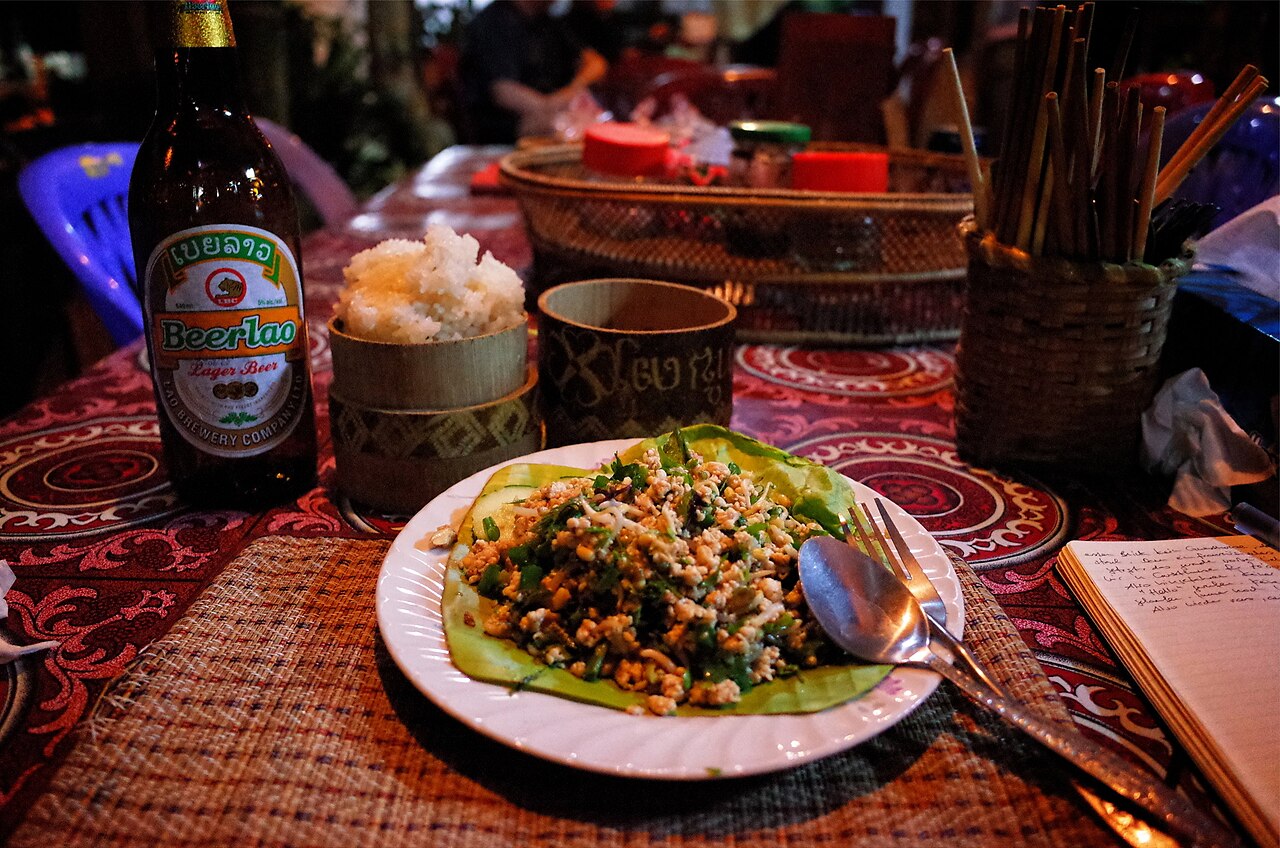
Putting together your first meal: Ask for a small portion of rice, a dip and two dishes prepared in different ways. Have the combinations and chilli levels explained. Order more if you need it rather than starting with several large menus. If your group has different dietary requirements, do not automatically share every dish.
Choose carefully prepared, fully cooked food: For meat and fish, choose hygienically prepared versions cooked throughout. The CDC’s country guidance recommends safe food and drink and caution with raw animal products. A familiar dish name does not tell you how thoroughly it has been cooked. Source: CDC – Laos.
Questions for a cooking class: Which two dishes would you like to make at home? Which ingredients need to be excluded? How long would you like to spend at the market and in the kitchen? Ask for written recipes and suitable alternatives for ingredients that are hard to find at home.
Understand dishes and accompaniments together
Ask your host to explain main dishes, sides and dips as a meal. A dish name alone does not reveal a sauce’s ingredients. Start with small portions and explore further when you find something you enjoy, keeping the experience relaxed.
For a group, compare chilli preferences, portion sizes and dietary needs in advance. Not everyone will want to share the same selection. A quiet restaurant with time for questions may be a better introduction than an extensive multi-stop walk.
Choose a cooking class that suits you
Confirm duration, transport, menu and inclusions. Ask whether the programme can be adapted and how much time you will actually spend cooking. For children, the operator should explain suitable tasks. A few dishes understood well can be more rewarding than a large menu prepared in a rush.
Explain dietary needs precisely
Describe vegetarian or vegan requirements all the way down to sauces, broths and garnishes. For allergies, a translated list of ingredients to avoid is useful. Discuss cross-contact too: removing a visible ingredient does not guarantee allergen-free preparation. For severe allergies, agree on a personal emergency plan with a clinician before travel.
Safe food and drinks
Choose hygienically prepared food and safe drinking water. Ask how raw products are prepared and avoid unnecessary risks. The CDC’s Laos guide explains food and water precautions. Source: CDC – Laos traveller information.
Official travel advice warns of methanol poisoning from contaminated alcohol in Laos. Be cautious with drinks of uncertain origin, including free drinks offered as harmless extras. Current advice on drinks.
Share your food interests
Tell our team whether you would like to cook, visit markets or take your time discovering local restaurants. Share dietary requirements and how much food-focused activity you want. We can spread these experiences naturally between sightseeing and free time.
Turn your ideas into a personal journey
Discuss your route, pace and preferences with our team to create a journey that suits you.
Plan your trip for freeExplore tour ideas →