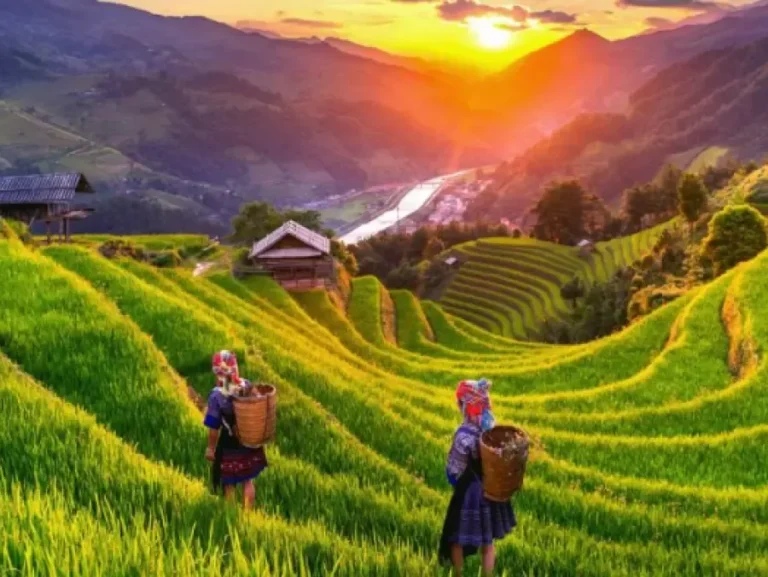
Choose your rice-country stop around your travel dates, walking preferences and available nights. The five destinations differ in scenery, journey time and seasonal rhythm.
By Long Pham, Travel Consultant — Vietnam Tour Fun
Mai Chau, Pu Luong, Sapa, Mu Cang Chai and Hoang Su Phi all offer rice-field scenery, but the journeys and experiences differ. This guide helps you choose a destination that fits your time, interests and preferred pace.
Some areas have two growing cycles, while higher terraces generally have one main crop. Harvest dates vary, so planning around a season works better than expecting every field to be golden on a particular day.
In this guide
1. Understanding the Harvest Windows
2. Mai Chau: The Easiest Introduction
3. Pu Luong: Layered Terraces, Two Harvests
4. Sapa: Vietnam’s Most Famous Rice Terraces
5. Mu Cang Chai: Terraces and Mountain Roads
6. Hoang Su Phi: A Quieter Highland Journey
7. Five Destinations at a Glance (comparison table)
8. How to Choose: Framework by Travel Style
9. Planning Your Trip
10. What Our Clients Say
Understanding the Harvest Windows: What Rice Season Actually Means
The most important thing to understand before booking is that northern Vietnam’s rice growing regions do not all follow the same agricultural calendar.
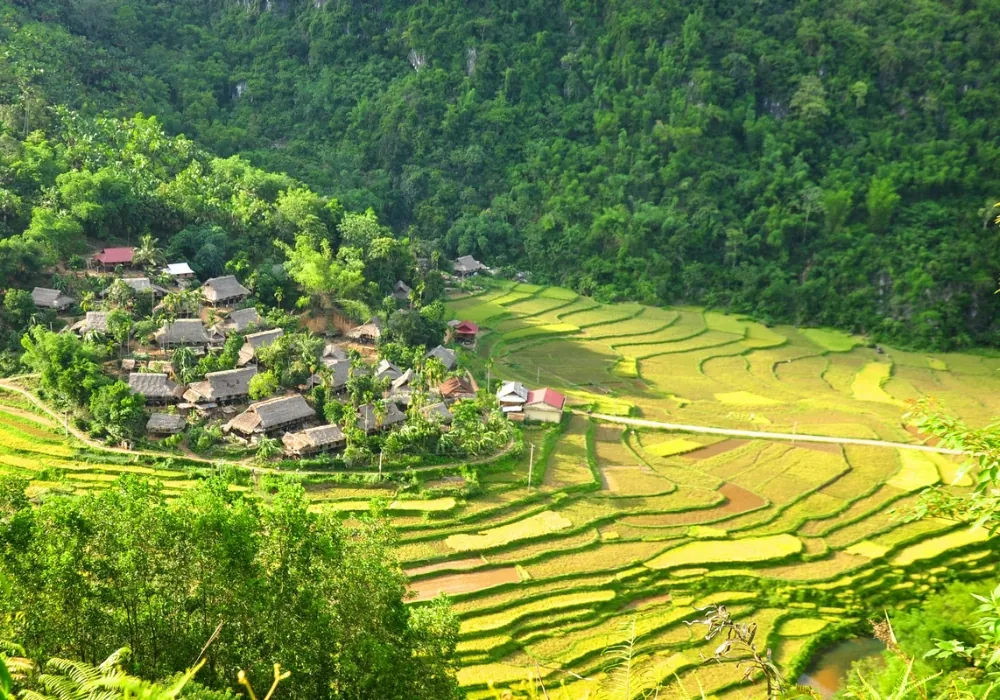
Many fields around Mai Chau and Pu Luong have two growing cycles, with harvest periods around late May–June and September–October. Dates vary locally, so confirm conditions with your guide before choosing your route.
The highland terraces around Sapa, Mu Cang Chai and Hoang Su Phi generally have one main crop, with ripening and harvest from late August into October depending on the area.
Planting dates, elevation and weather affect individual fields. It is normal to see green, gold and harvested paddies in the same valley.
Use seasonal windows as a guide, keep some flexibility and ask about recent field conditions as your trip approaches. No itinerary can guarantee a particular stage of the harvest.
Mai Chau: The Easiest Introduction to Northern Vietnam’s Rice Country
Getting There
Allow several hours by road from Hanoi. The exact distance and journey time depend on your starting point, route and accommodation.
The Landscape and Harvest Season
Mai Chau Valley sits in what is now Phu Tho Province. The valley is broad and flat, which is what distinguishes it immediately from every other destination in this guide: the rice here grows on a valley floor, not carved into mountain terraces. The landscape is wide and open, ringed by green hills, with White Thai stilt house villages spread across the farmland.
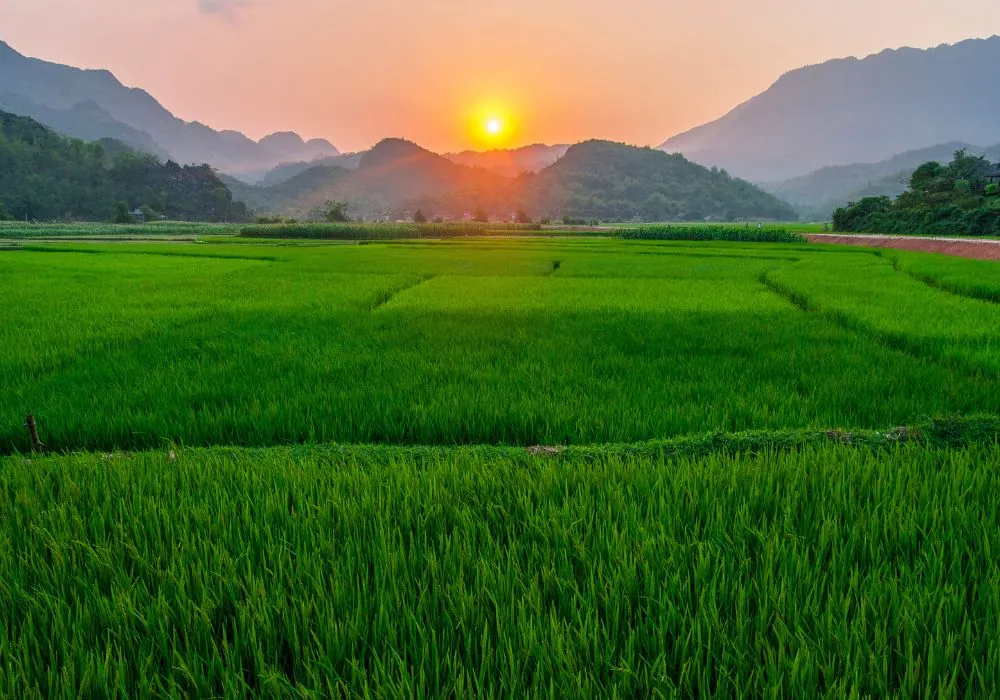
Harvests often fall around May–June and September–October, though individual fields vary. Early summer can be hot and wet; autumn can also bring rain. Choose dates for the wider itinerary as well as the rice scenery.
Lac Village and Pom Coong have well-established homestays and can be busy at popular times. Other villages, including Na Phon and Mai Hich, offer additional bases to consider.
What to Do
Cycling and village walks are popular, with gentler routes available across the valley. Check traffic, heat and surface conditions, and choose activities according to fitness and confidence rather than age.
Avana Retreat and Mai Chau Ecolodge are among the area’s accommodation options. Compare their location, facilities and travel times with the activities you want to do.
Mai Chau suits travelers who want gentle countryside, reliable comfort, easy movement, and a shorter drive from Hanoi. It is the clearest starting point for first time visitors to northern Vietnam’s highland rice country.
Best for
– First-time visitors to northern Vietnam’s highland rice country
– Groups who want activities adapted to different fitness levels
– Short countryside breaks from Hanoi
– Boutique lodge comfort alongside working rice field scenery
Suggested stay: 2 to 3 nights
Pu Luong: Layered Terraces, Deeper Villages, and Two Harvests a Year
Getting There
Allow roughly four to five hours or more by road from Hanoi, depending on your lodge, route and stops.
The Landscape and Harvest Season
Pu Luong Nature Reserve in Thanh Hoa combines terraced fields, limestone hills and forest. Thai and Muong communities live among the valleys. It complements Mai Chau’s more open landscape.
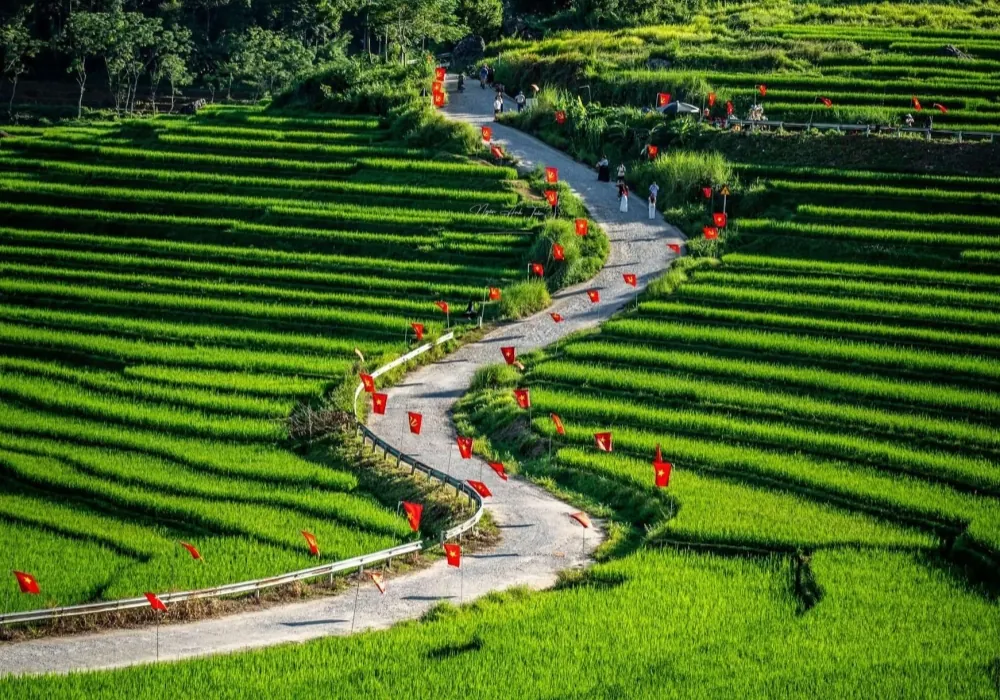
The Ban Don area is known for terrace views, with lodges overlooking the surrounding fields. Check the particular room and location when booking.
Key Villages and Experiences
Kho Muong and nearby villages can be explored on walks of varying length. Choose a route by distance, ascent and path conditions; a short village walk and a full day of trekking are different experiences.
Stilt-house architecture reflects local communities and household traditions. Visit with a host or guide, ask before entering, and follow the household’s customs.
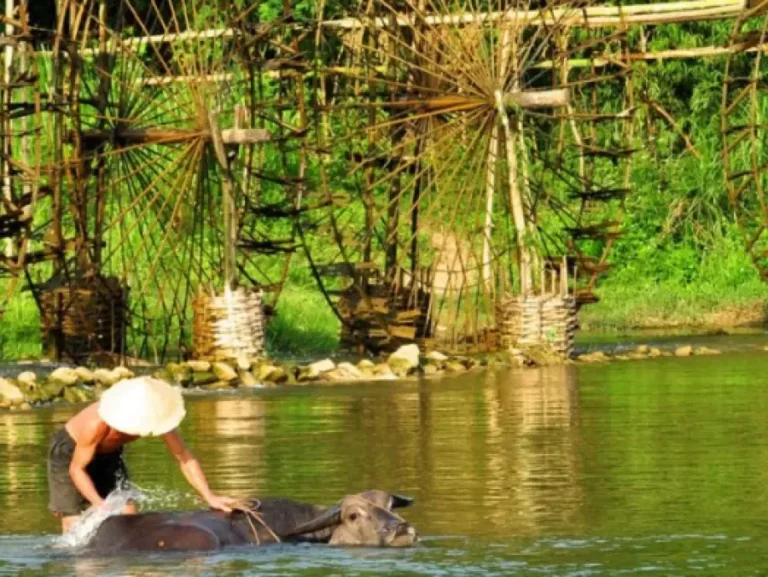
Bamboo water wheels and the cave near Kho Muong add variety to a visit. Cave access can involve uneven, slippery ground and requires appropriate local guidance and equipment. Decide suitability based on mobility and conditions.
Rice seasons vary between villages. Late spring and autumn are useful starting points for planning, with recent local information needed before travel.
Pu Luong suits travelers who want a more layered and culturally immersive landscape, are comfortable with light walking, and do not mind a longer drive from Hanoi.
Best for
– Travelers who enjoy walking as part of the day, not just scenery
– Travellers interested in Thai and Muong village life
– Couples and small groups looking for ecolodge comfort away from tourist crowds
– Travellers seeking terraced landscapes within a shorter circuit from Hanoi
Suggested stay: 2 to 3 nights
For a closer comparison of walks, village stays and a combined itinerary, see the dedicated guide.
Pu Luong vs Mai Chau in Rice Season: How to Choose the Right Northern Vietnam Escape
Sapa: Vietnam’s Most Famous Rice Terraces and What That Means in Practice
Getting There
Allow around five to six hours or more by road from Hanoi. An overnight train to Lao Cai followed by a road transfer is another option; Sapa itself has no mainline railway station.
The Harvest and the Valley
Sapa is now administratively part of a merged Lao Cai Province following Vietnam’s July 2025 provincial reform. It sits at roughly 1,500 metres elevation in the Hoang Lien Son range, and the Muong Hoa Valley running southeast from town toward Ban Ho is the main rice terrace landscape.
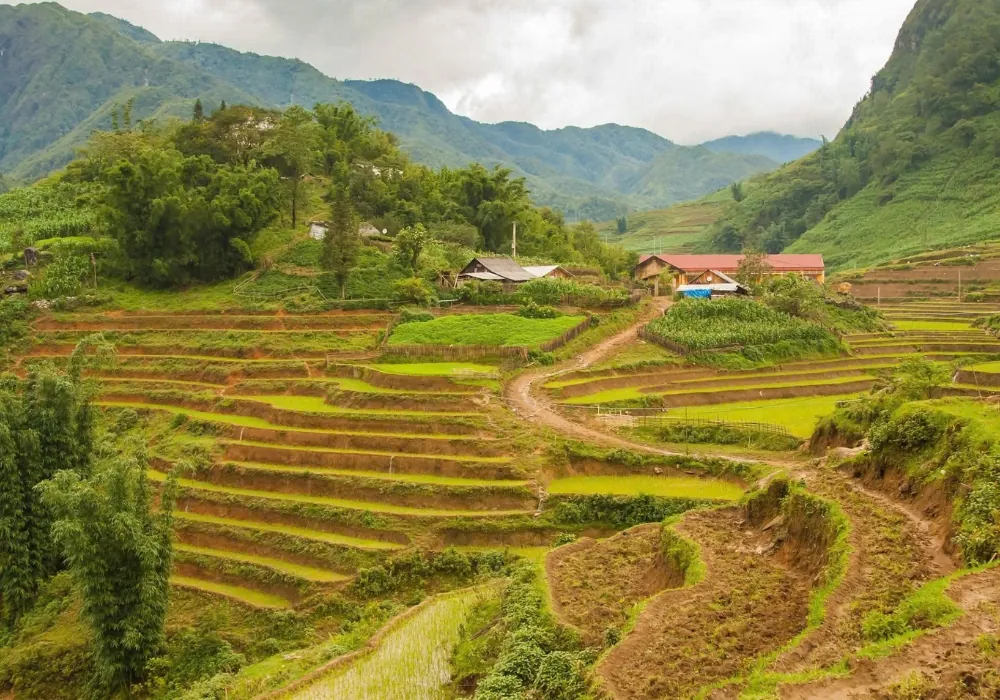
The wider area is home to Hmong, Dao, Tay, Giay and Xa Pho communities. Village visits around the valleys offer different landscapes and traditions, so choose your route with a local guide.
Rice often ripens from late August through September, with considerable variation between villages and years. Do not rely on a fixed week for peak colour.
What Travelers Should Know About Sapa
Sapa town has a wide range of hotels, restaurants and attractions. Popular sights such as the Fansipan cable car and Cat Cat can be busy; their developed visitor facilities offer a different experience from a quieter village walk.
A village base can bring you closer to the terraces, while staying in town gives easier access to services. Choose according to your priorities, and confirm the walking and transfer requirements.
Sapa suits travellers who value a choice of accommodation, established services and varied excursions. Quieter experiences are possible with careful selection of the route and base.
Best for
– Travelers who want Vietnam’s most iconic highland terrace landscape
– Travellers who would like the option of a train to Lao Cai
– Anyone combining highland Vietnam with a comfortable boutique hotel base
Choose a town or village base to suit your priorities
Suggested stay: 2 to 3 nights
Mu Cang Chai: Terraces and Mountain Roads
Getting There
Allow a full travel day from Hanoi, often six to eight hours or more depending on the route, road conditions and stops. Access is by road.
The Landscape and Harvest Season
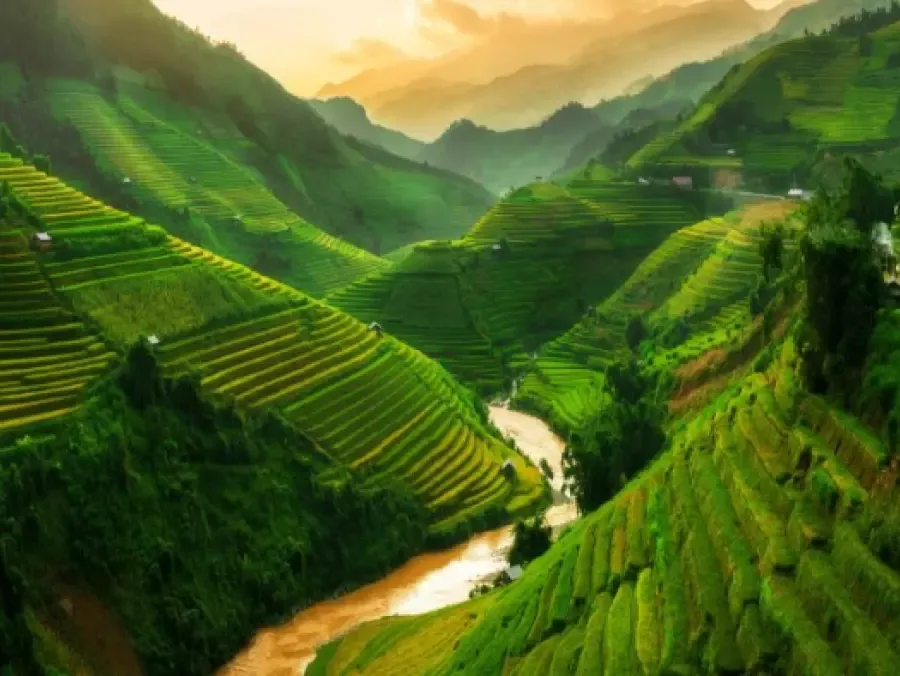
Mu Cang Chai is now in the merged Lao Cai Province. The three most celebrated terrace areas (La Pan Tan, Che Cu Nha, and De Xu Phinh) are together designated a Vietnamese National Heritage Site. The Mam Xoi Hill in La Pan Tan, known to photographers as Sticky Rice Hill, produces what may be the most reproduced single rice terrace image in Vietnam.
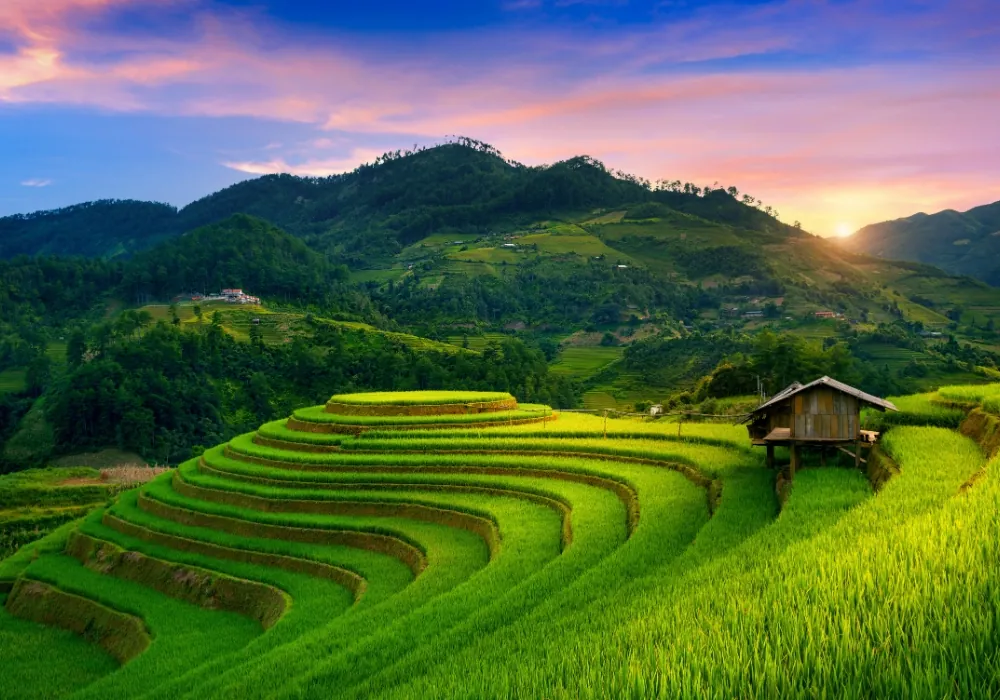
Hmong communities are central to the area’s farming landscape. The main rice harvest is generally associated with September and October, but conditions vary by field and year.
Practical Notes on the Ground
Some viewpoints involve steep or uneven approaches. Discuss transport and walking options in advance rather than assuming a motorbike taxi suits everyone. Popular viewpoints can be busy on harvest-season weekends.
A route via Nghia Lo or Tu Le can break up the journey. Khau Pha Pass adds mountain scenery, while Tu Le is known for its sticky rice. Allow several days to enjoy the area without rushing.
Mu Cang Chai suits travelers who prioritise the visual impact of terraced rice landscapes, are willing to accept a long drive and basic to mid range accommodation, and want fewer international tourists than Sapa.
Best for
– Travellers interested in terrace photography
– Adventure travelers comfortable with a six to eight hour mountain drive
– Visitors able to travel midweek during popular harvest periods
– Travelers adding a scenic mountain loop to a longer northern itinerary
Suggested stay: 3 to 4 nights
Hoang Su Phi: A Quieter Highland Journey
Getting There
Allow around six to eight hours or more from Hanoi, with travel time varying substantially by village. The final approaches use winding mountain roads. The area is now in Tuyen Quang Province following the 2025 provincial merger.
The Landscape and Heritage
Terraces around Ban Phung and other villages reflect generations of farming by La Chi and other local communities. Selected terrace landscapes have national heritage recognition; this is distinct from UNESCO World Heritage status.
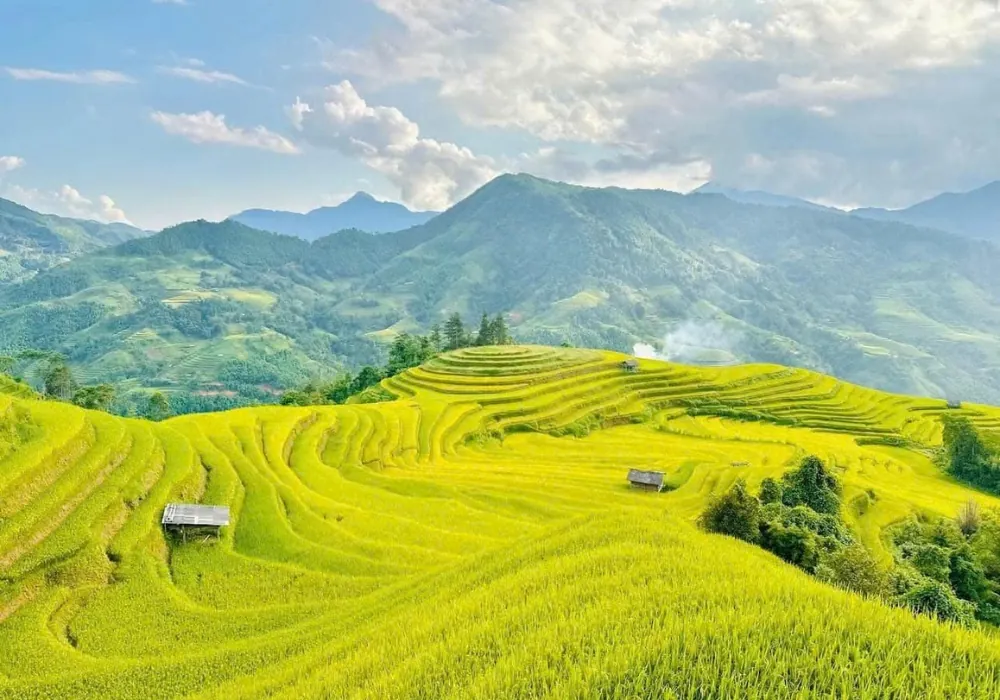
The wider area is home to several ethnic communities, including Nung, Dao, Tay, La Chi and Hmong. Local markets and village visits offer opportunities to learn with a guide and respectful hosts.
The harvest is generally associated with September and October. Its timing does not follow the other destinations by a fixed number of days; check conditions village by village.
What to Expect on the Ground
Accommodation includes homestays and countryside lodges, with facilities that vary. Ask about bathrooms, stairs, heating and access rather than assuming all stays offer the same comfort.
Cash and mobile coverage can be limited in rural areas. Plan supplies and transfers in advance, use an experienced driver and allow for road disruption after heavy rain.
Hoang Su Phi suits travellers comfortable with longer journeys and fewer services. First-time visitors can enjoy it too, provided the practical demands match their expectations.
Best for
– Travelers who have already visited one or two northern highland destinations
– Travellers interested in locally hosted cultural visits
– Anyone willing to accept a longer drive and basic conditions for something genuinely remote
– Photographers and slower travellers who prefer quieter areas
Suggested stay: 3 to 4 nights
Sapa and Hoang Su Phi can be combined on a longer circuit. The dedicated guide compares their practical demands and explains why harvest timing needs to be checked locally.
Rice Harvest Season in Sapa and Hoang Su Phi: What the Window Looks Like and How Not to Miss It
Five Destinations at a Glance
| Mai Chau | Pu Luong | Sapa | Mu Cang Chai | Hoang Su Phi | |
|---|---|---|---|---|---|
| From Hanoi | Several hours; route dependent | Around 4–5 hours or more | Around 5–6 hours or more | Around 6–8 hours or more | Around 6–8 hours or more; village dependent |
| Crops per year | Often two; varies locally | Often two; varies locally | Usually one main crop | Usually one main crop | Usually one main crop |
| Golden window | Late May to June and Sep to Oct | Late May to June and Sep to Oct | Often late August–September | Often September–October | Often September–October |
| Crowd level | Moderate | Quieter overall; popular places can be busy | Busy in popular areas | Moderate to high (weekends) | Low |
| Physical effort | Low (flat cycling) | Low to moderate | Varies by chosen route | Moderate | Moderate to high |
| Tourism level | Established homestays and retreats | Homestays and countryside lodges | Wide choice of services | Homestays and lodges | Fewer services; varying facilities |
| Province (2025) | Phu Tho | Thanh Hoa | Lao Cai | Lao Cai | Tuyen Quang |
| Best for | First-timers, comfort, easy travel | Cultural depth, mountain lodges | Iconic scenery, easy logistics | Dramatic photography, slow travel | Off the beaten path, extended trekking |
On a small screen, swipe the table sideways to see all columns.
How to Choose: A Framework by Travel Style
If this is your first trip into northern Vietnam’s highland rice country
Mai Chau or Pu Luong can work well for a shorter introduction, while Sapa offers a wider range of services. Compare your available time, desired activities and travel dates rather than choosing on scenery alone.
If you want the most dramatic terrace landscape and are prepared for a long drive
Consider Mu Cang Chai during the broader September–October harvest period, checking local conditions before travel. Break up the journey and allow time for weather and photography stops.
If logistics matter more than crowd avoidance
Sapa can be reached by taking a train to Lao Cai and continuing by road. Compare this with a direct road transfer; comfort depends on your preferences, service and accommodation.
If you want the fewest tourists and the deepest cultural encounter
Consider Hoang Su Phi if you are comfortable with longer transfers and fewer services. Allow enough time for village visits without a demanding schedule.
If you want to combine destinations
Possible combinations include Mai Chau and Pu Luong over four or five days, or a longer route linking Sapa and Mu Cang Chai. A circuit covering all five needs considerably more time and should be designed around travel distances and your pace.
These itineraries offer starting points for a tailored trip:
Pu Luong and Mai Chau tour: Explore Northern Vietnam — 13 Days
Sapa and Hoang Su Phi tour: Best of Vietnam — 14 Days
Planning Your Trip
Book ahead, with flexibility where possible
Popular lodges and transport can fill during harvest season. Book in good time, review cancellation terms and leave room to adjust local outings as field conditions become clearer.
Prepare for mountain weather
Weather in northern Vietnam changes quickly during harvest season. Pack comfortable walking shoes, layered clothing for cool evenings, and a light rain layer. Trekking paths after rain are slippery across all five destinations.
Accommodation by destination
Each destination has a range of accommodation, from simple homestays to more comfortable lodges. Confirm room type, bathrooms, stairs and road access before booking. A remote location does not automatically mean basic facilities, and a familiar hotel label does not guarantee a particular standard.
Road conditions across all five destinations
Choose transport according to comfort, mobility and the route. An experienced local driver can make mountain transfers easier. Shared services may involve additional connections, while heavy rain can affect any route.
What Travelers Say
Traveller feedback can help you understand the experience of planning with Vietnam Tour Fun.
Read reviews on TripAdvisor →
Read Vietnam Tour Fun traveller reviews
Why Vietnam Tour Fun
Vietnam Tour Fun can tailor a northern itinerary around the time you have, the landscapes you want to see and the level of activity you enjoy.
We can recommend suitable bases and discuss seasonal conditions while leaving time for the journeys between destinations.
Start Planning Your Trip
Share your dates, available days and preferred pace. We can suggest an itinerary and check local conditions as your trip approaches.
For an itinerary focused on northern landscapes and local life, explore Northern Vietnam: Rice Terraces and Village Life - 13 Days. Discuss your travel dates with our team before choosing the best places for rice-season scenery.
Further information: Vietnam Tourism: Pu Luong.